Author Archives: Nona

Delaware Art Museum: Howard Pyle, John Sloan and Others

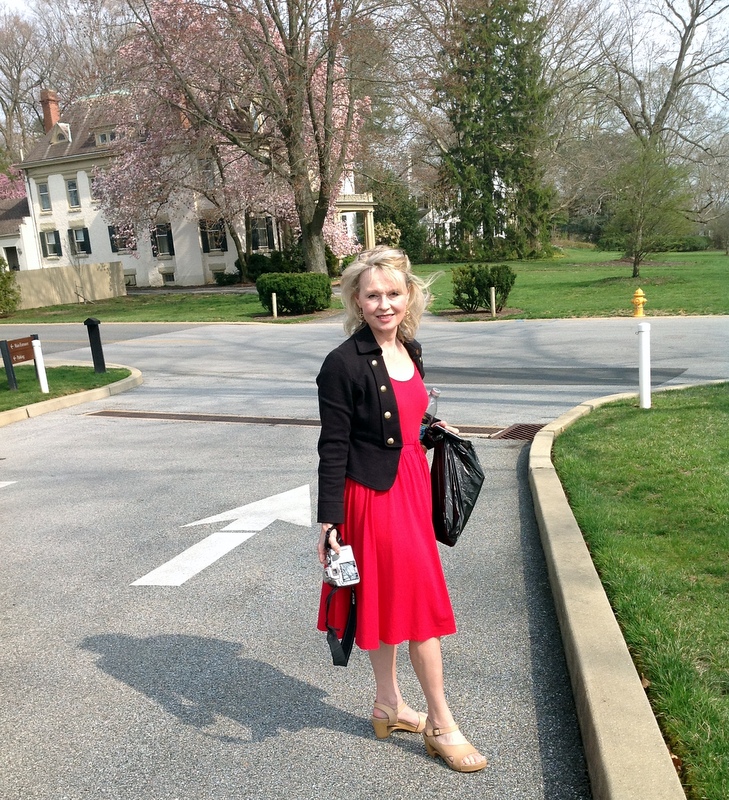
Juggling camera, backpack and a bag full of art cards!  Gorgeous spring day -- in the 60s -- in a lovely neighborhood, full of old houses.

Juggling camera, backpack and a bag full of art cards! Gorgeous spring day — in the 60s — in a lovely neighborhood, full of old houses.

Besides PreRaphaelites, the Delaware Museum was  hosting an exhibition of the great American illustrator, Howard Pyle, who taught N C Wyeth and a host of others.  I’d seen some of these paintings on a previous trip at the Brandywine River Museum, to whose permanent collection they belong.  However, there a great many I hadn’t seen, including wonderful ones rendered in black and white oils.  The draftsmanship is superb.  What a wonderful painter he was.  I’m so drawn to illustration that I surely would have tried to become a professional illustrator if it was still in the publishing budget of periodicals and regular fiction.  When I was growing up, I thought the ideal job would be to illustrate for National Geographic history articles.  Photography has taken the place of illustration in magazines and no pictures at all has become the norm in fiction. Our imaginations are the poorer for it.

….but I was able to revel in the wonderful illustrations I saw a the Delaware Museum for an entire afternoon.  Lucky me!

Before I get to Howard Pyle, I will post some of the non-PreRaphaelite works I saw.  Get ready:  there are a lot of pictures in this post!
Portrait of the Artist's Wife

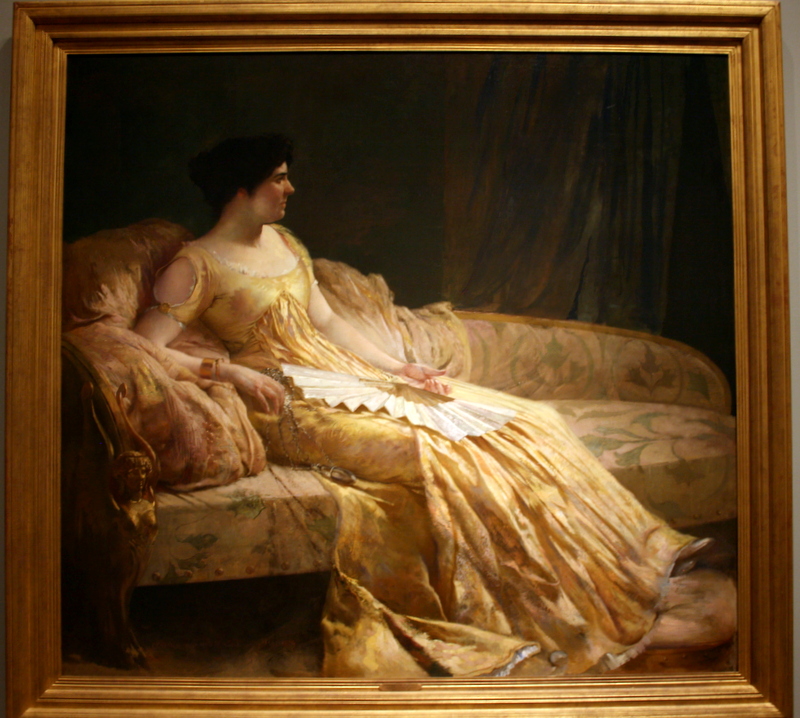
Portrait of the Artist’s Wife


This was the most impressive painting I saw at the exhibit, and it’s not famous enough for me ever to have seen it before.  I’m sure the artist must have painted society portraits. This one is of his wife, who was an artist in her own right, an actress I think.  It’s large and I was looking up at it when close.  The texture and light of the fabric conveyed by the brushwork was amazing.  I don’t remember the artist’s name; I should have been carrying a notebook or taking pictures of all the signage.  You’d think I would have for this one.

Detail of drapery

Detail of drapery


Detail of hand and fan

Detail of hand and fan

Famous paintings generally reward the viewer, when they finally see the real thing and aren’t looking at an art book, with the conviction that they are deservedly beloved.  However, it’s my continual experience that the paintings by extremely skilled artists I’ve never heard of before are the ones that I’m blown away by at museums.  I’m often most affected by how a painter paints and what I like the most are paintings that convey a very convincing realism, but are not rendered in such a way that the brushstrokes disappear.  I LOVE oil paint.  I love to look at it.  Even when there are stunning sculptures or watercolors in the room, my attention will go immediately to the rich, glorious color and brushwork of oil paintings.  This one was so rewarding to look at.  Didn’t matter who the subject was.  The artist rendered her beautifully.  I wanted to grab handful of that skirt fabric; you could feel the weight of it just by looking!
South American Landscape by Frederic Edwin Church, 1873
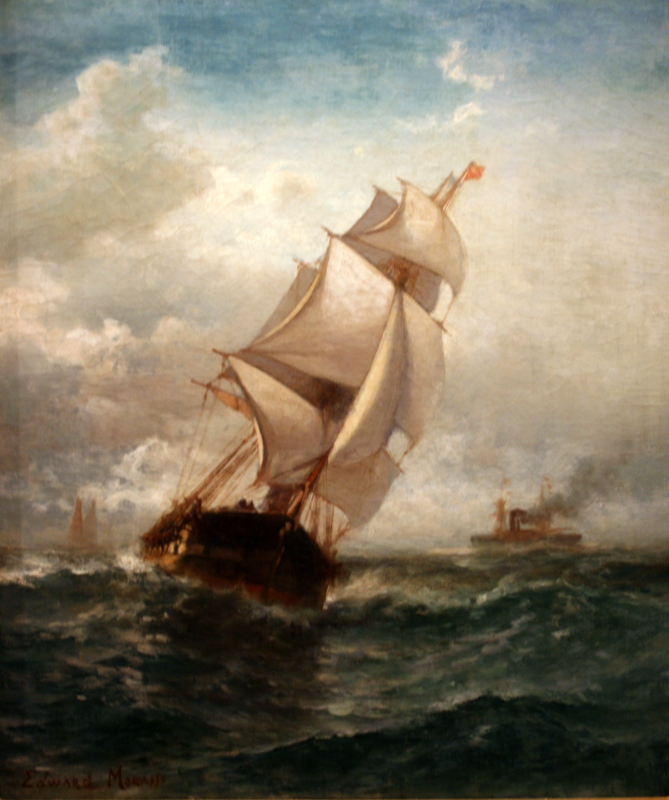
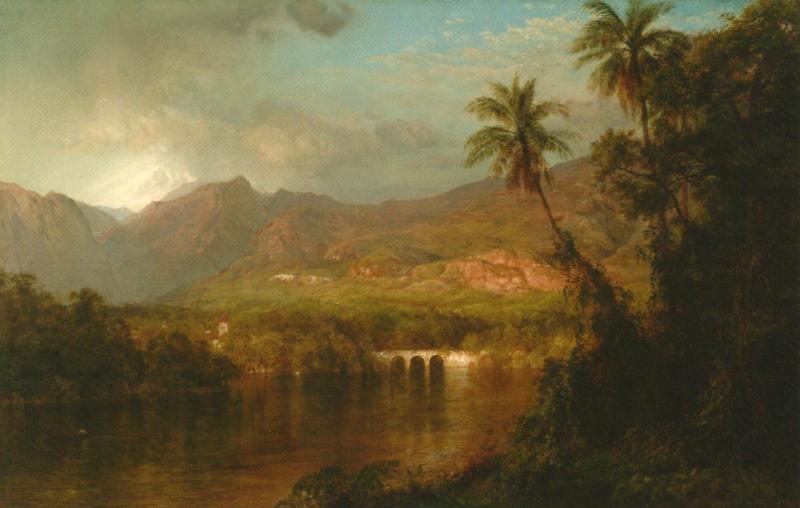
South American Landscape by Frederic Edwin Church, 1873

I'm sorry that I have no notes about this one

I’m sorry that I have no notes about this one

This one was by someone I didn't expect, but little good it does me to remember that much about it, because I don't remember who it was.

This one was by someone I didn’t expect, but little good it does me to remember that much about it, because I don’t remember who it was.
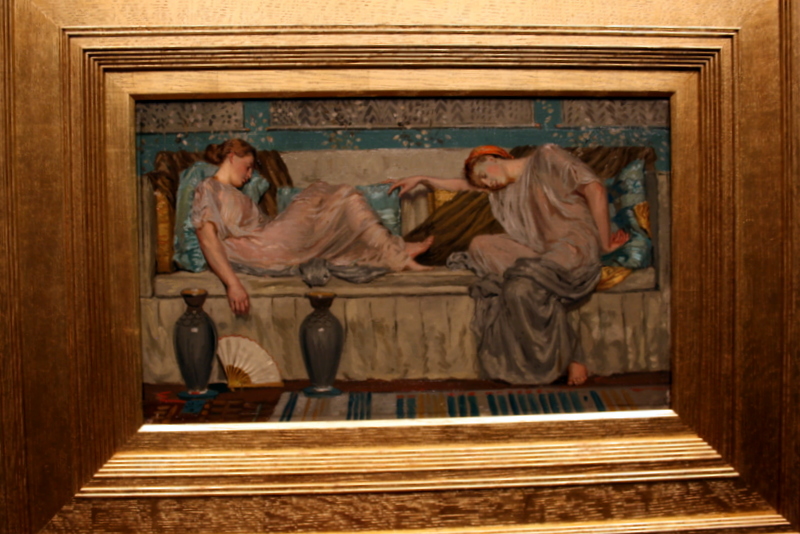
I love the way this one is painted.  Can't tell you who it's by though.

I love the way this one is painted. Can’t tell you who it’s by though.
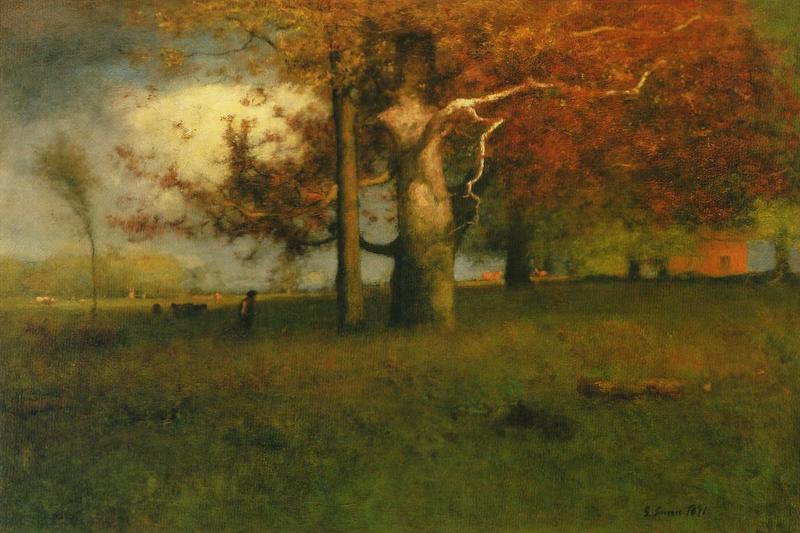
Early Autumn by George Inness, 1891
Early Autumn by George Inness, 1891

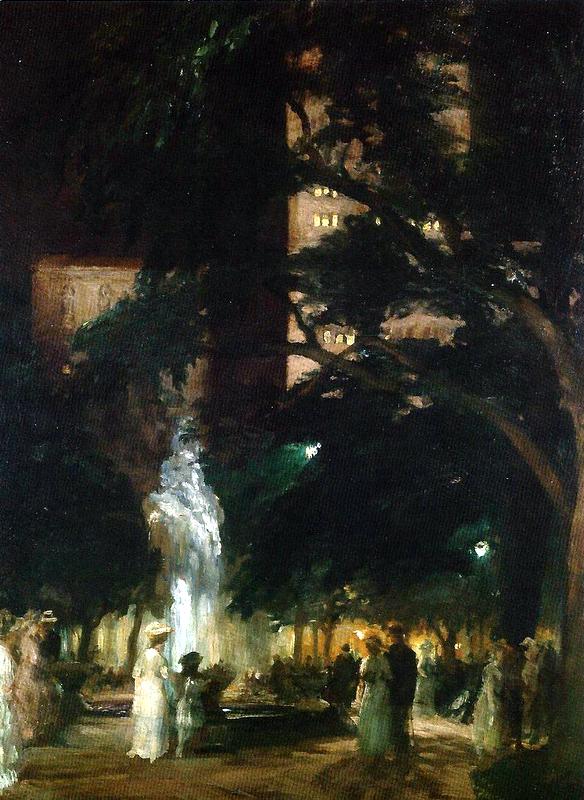
Throbbing Fountain, Night by John Sloan, 1908

Throbbing Fountain, Night by John Sloan, 1908

Jefferson Market by John Sloan, 1917, 1922

Jefferson Market by John Sloan, 1917, 1922

Wet Night, Washington Square by John Sloan, 1928

Wet Night, Washington Square by John Sloan, 1928

3-IMG_5570

The above is a wonderful plaster sculpture.  And now to Howard Pyle!

Who are we that Heaven should make of the old sea a fowling net? by Howard Pyle, 1909

Who are we that Heaven should make of the old sea a fowling net? by Howard Pyle, 1909

I think this is my favorite of all Howard Pyle’s illustrations — though that is a very hard thing to choose — because it is so romantic and the colors and costumes are so gorgeous.  I’d love to know what the story is about.  It reminds me of Daphne du Maurier’s Frenchman’s Creek.
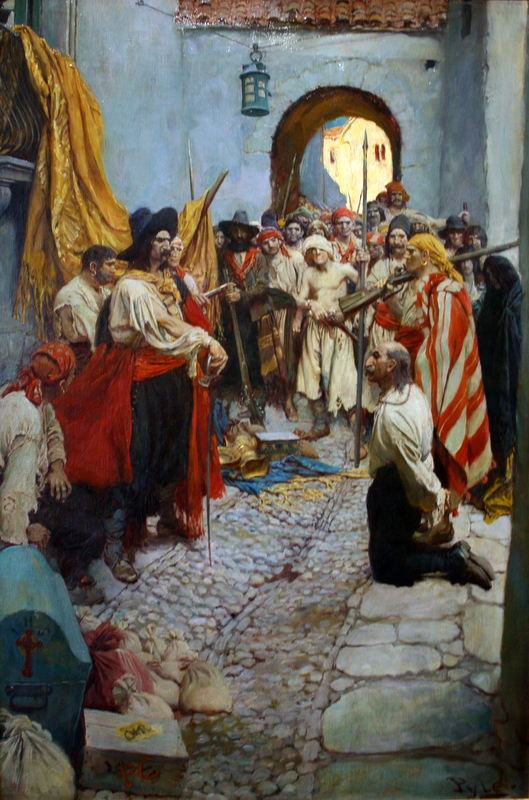
Extorting Tribute by Howard Pyle from Fate of Treasure Town

Extorting Tribute by Howard Pyle from Fate of Treasure Town

The Mermaid by Howard Pyle, 1910

The Mermaid by Howard Pyle, 1910

So the Treasure was Divided by Howard Pyle, from the The Fate of Treasure Town, 1905

So the Treasure was Divided by Howard Pyle, from the The Fate of Treasure Town, 1905

Attack on a Galleon by Howard Pyle, 1905

Attack on a Galleon by Howard Pyle, 1905

The Dancer from "Lola" by Howard Pyle, 1909

The Dancer from “Lola” by Howard Pyle, 1909
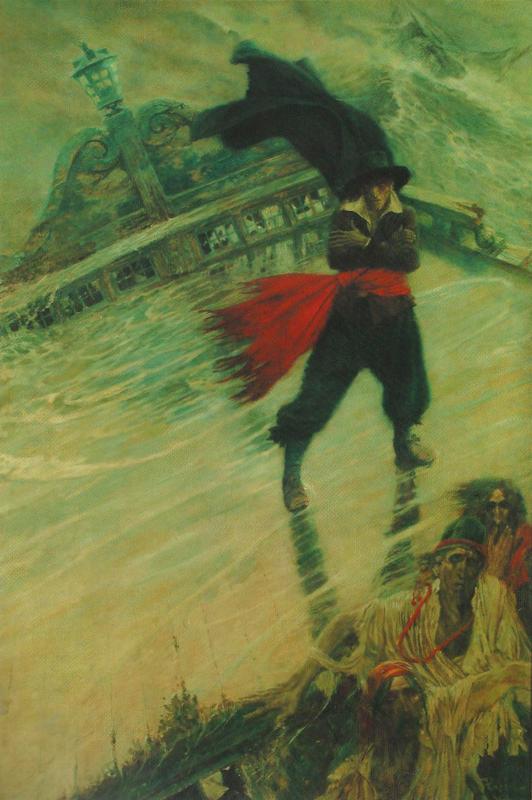
 

The Flying Dutchman by Howard Pyle, 1900

The Flying Dutchman by Howard Pyle, 1900

The Buccaneer was a Picturesque Fellow by Howard Pyle, 1905

The Buccaneer was a Picturesque Fellow by Howard Pyle, 1905

I read at the Museum that Howard Pyle made up the original Pirate Costume.  He needed to illustrate Pirates, so he came up with a costume that was then adopted by Hollywood and a host of other illustrators.  This is so deeply impressed in our consciousness that we can’t imagine a pirate looking any other way, unless they are very refined pirates, like Captain Blood.
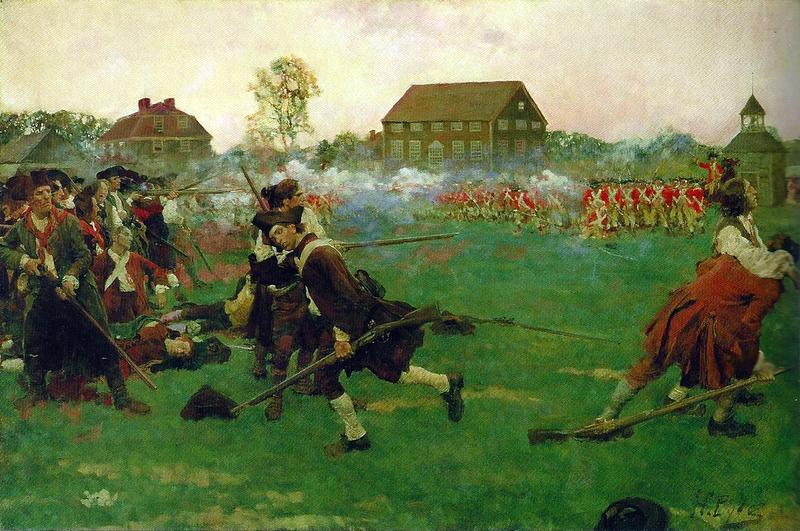
The Fight on Lexington Common, April 19, 1775 by Howard Pyle, 1897
The Fight on Lexington Common, April 19, 1775 by Howard Pyle, 1897

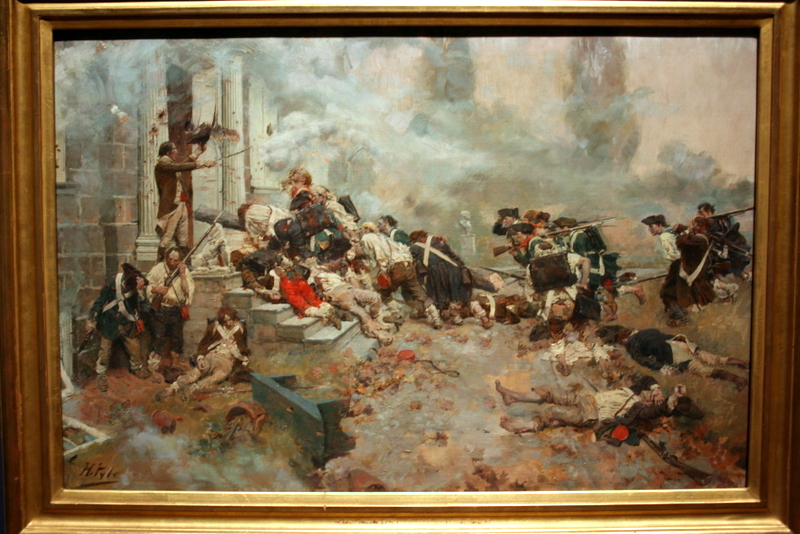
The Attack upon the Chew House by Howard Pyle, 1898
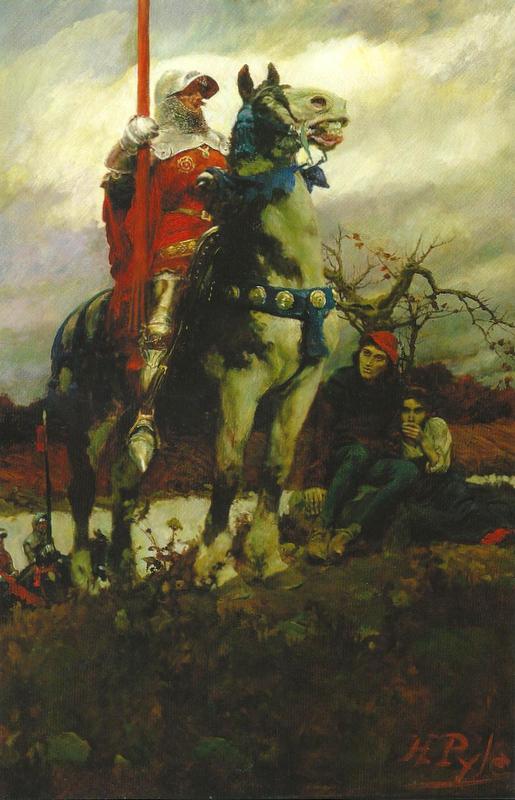
The Attack upon the Chew House by Howard Pyle, 1898

The Coming of Lancaster by Howard Pyle, 1908

The Coming of Lancaster by Howard Pyle, 1908

"A wolf had not been seen in Salem for thirty years" by Howard Pyle, 1909

“A wolf had not been seen in Salem for thirty years” by Howard Pyle, 1909


When the World Was Young by Howard Pyle, 1908
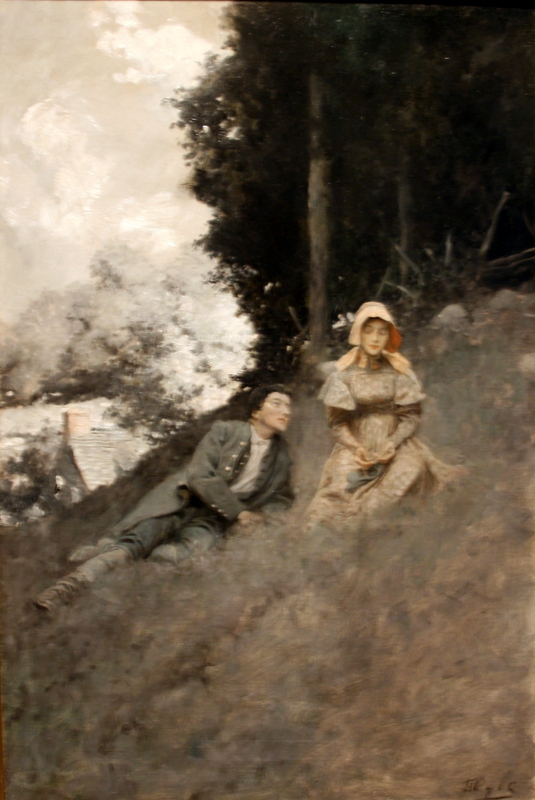
When the World Was Young by Howard Pyle, 1908

I quite like Pyle's illustrations that are black and white or very faintly colored as much as the ones in full color.

I quite like Pyle’s illustrations that are black and white or very faintly colored as much as the ones in full color.

Sorry that this one is a bit blurry, the fault of dim light and a wavering hand at the camera.

The Town Crier by Howard Pyle

The Town Crier by Howard Pyle

I actually don’t know the proper name for this one and, again, it’s a bit blurry, but I find these illustrations so rich and detailed to look at, like old photographs, but so much better.
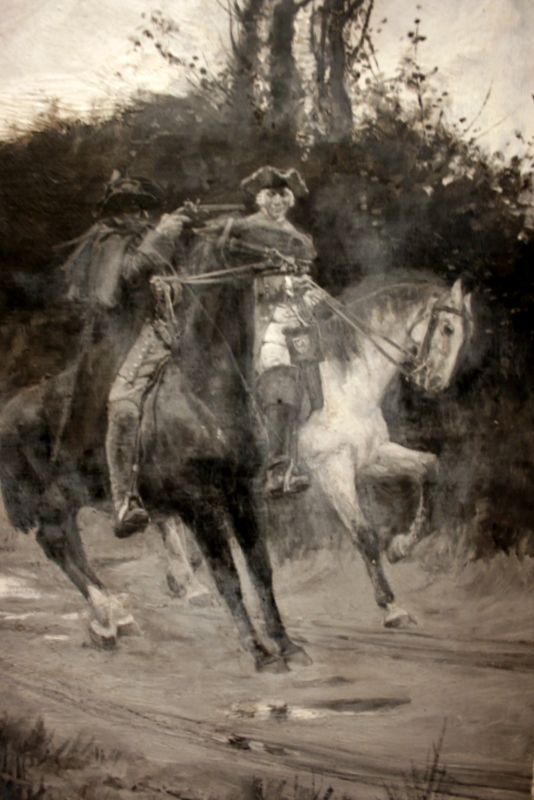
Dick Turpin by Howard Pyle -- the hazy whiteness around the horsemen is me reflected in the glass

Dick Turpin by Howard Pyle — the hazy whiteness around the horsemen is me reflected in the glass.

This was exciting, but I don’t remember what the subject was. Looks like a sort of Alexander/Buchephalus affair.  The camera was very unfocused, I’m afraid.


05-IMG_5535

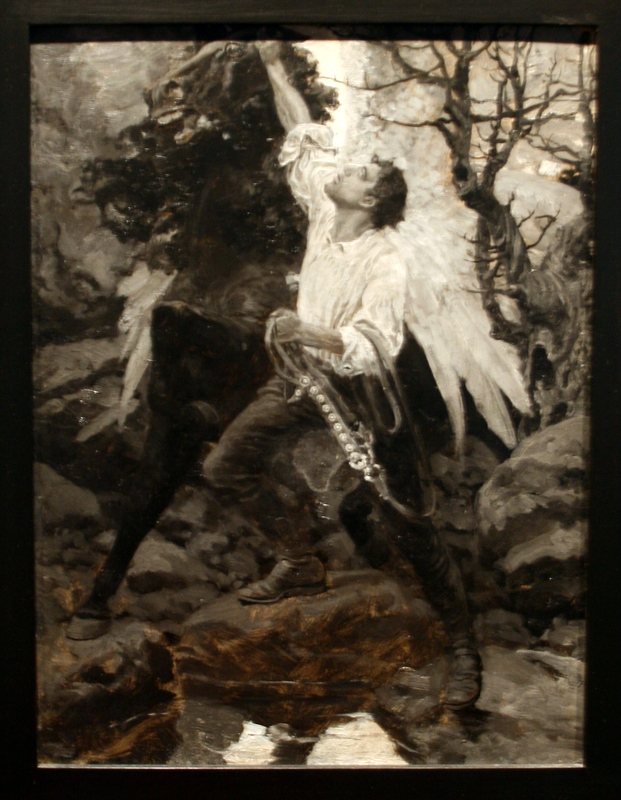
This was exciting.  Looks like a modern day Pegasus / Bellerophon affrair.

This was exciting. Looks like a modern day Pegasus / Bellerophon affrair.

Breton peasants in a storm

Breton peasants in a storm


Don't know what this one is about either

Don’t know what this one is about either.

Hey, but at least it’s not as blurry!

Besides Howard Pyle, there were a number of other illustrators.  I like the one below particularly.  It seems some callous wretch is about to abandon a woman in the mountains with her flat tire.  Cad!

"You can't leave here to suffer" by Gayle Hoskins, 1924 for Roads of Doubt

“You can’t leave here to suffer” by Gayle Hoskins, 1924 for Roads of Doubt

The Circus

The Circus

Hans Brinker, Frank E Schoonover, 1924
Hans Brinker, Frank E Schoonover, 1924

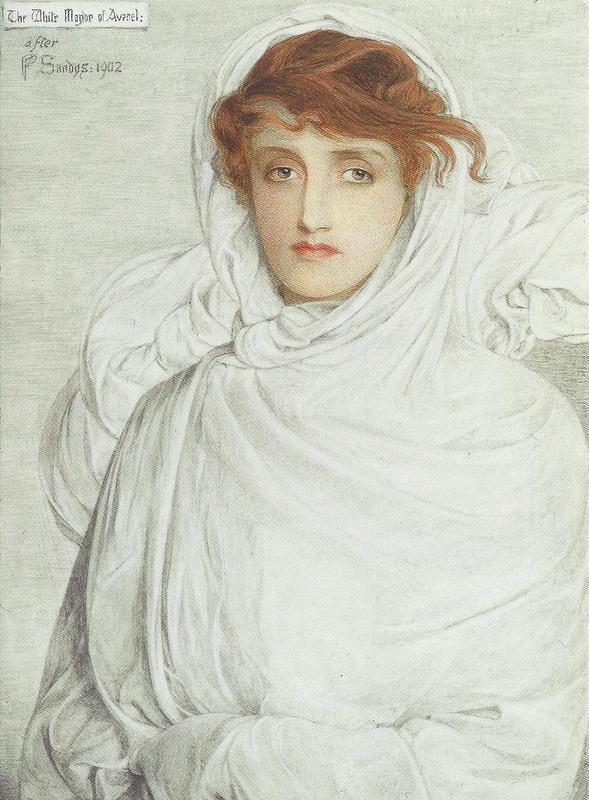
White Mayde of Avenel, Winifred Sandys, 1902

The PreRaphaelites go Hollywood

The PreRaphaelites go Hollywood

This is sort of awful, I think, but I totally get why they hung it.
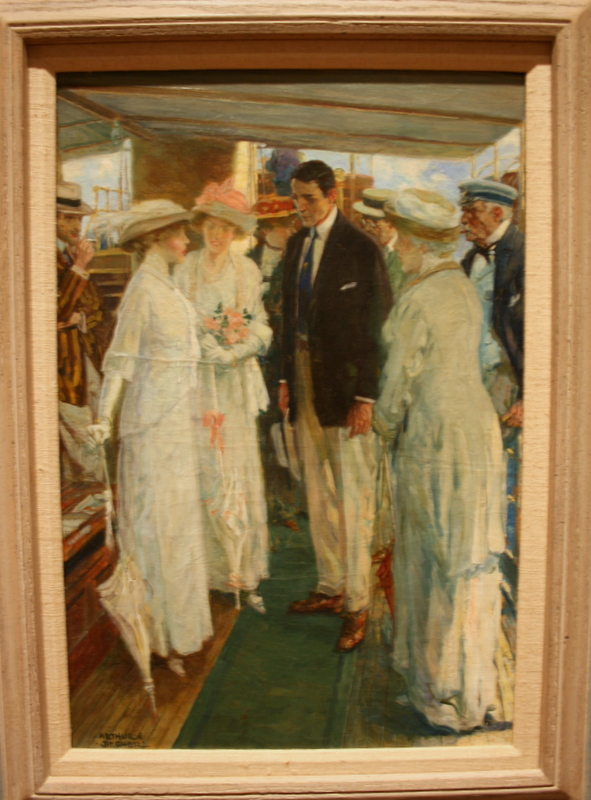
4-IMG_5499

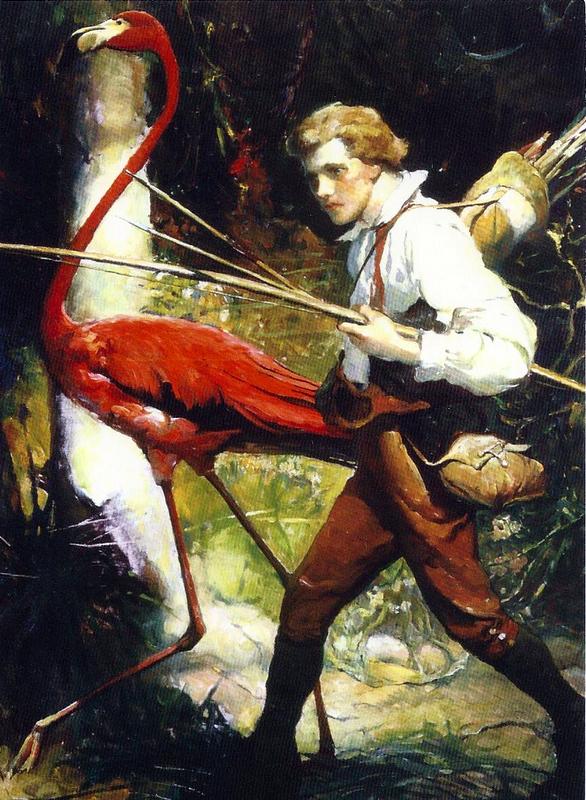
Boy and Flamingo by Frank E Schoonover, 1924

Boy and Flamingo by Frank E Schoonover, 1924

Now, what kind of adventure would a boy go on with a flamingo!  My mind’s a complete blank.  They look serious though.  Maybe a bird rescue mission.  Oh!  It’s from The Swiss Family Robinson!  I don’t recognize it, because I haven’t read it.  Misspent childhood.

Blackbeard in Smoke and Flame by Frank E Schoonover, 1922

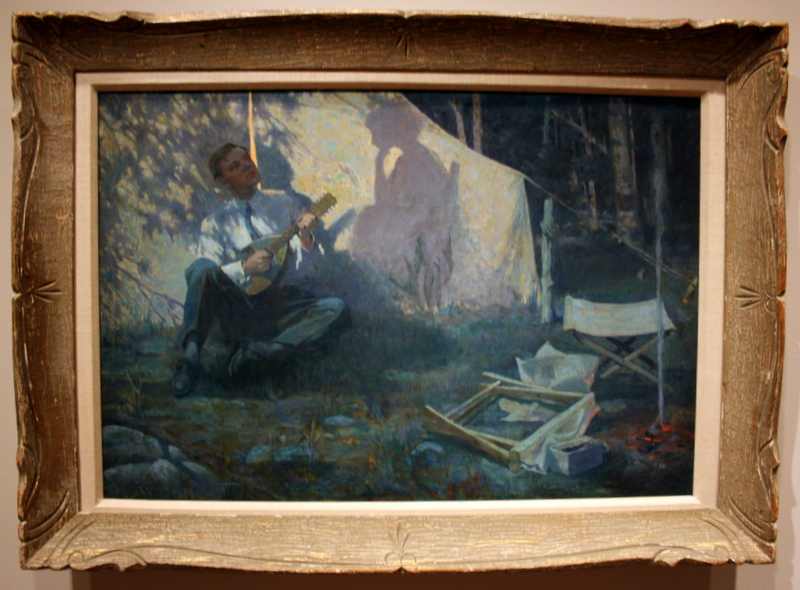
This painting of a serenade was lovely.

This painting of a serenade was lovely.

By Frank Stick
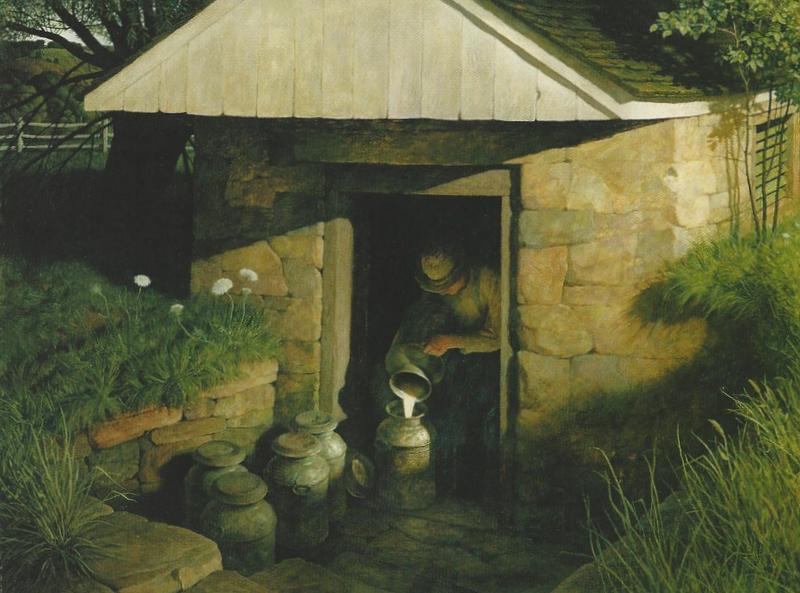
By Frank Stick

The Springhouse by N C Wyeth, 1944
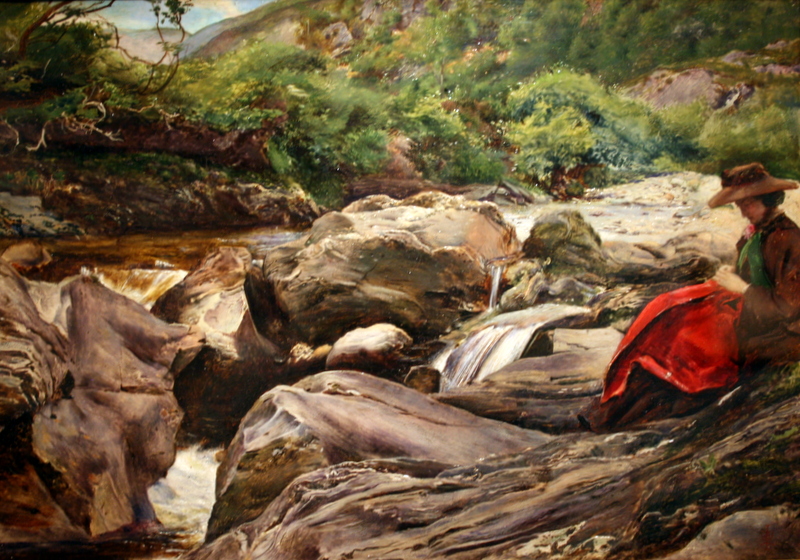
The Springhouse by N C Wyeth, 1944
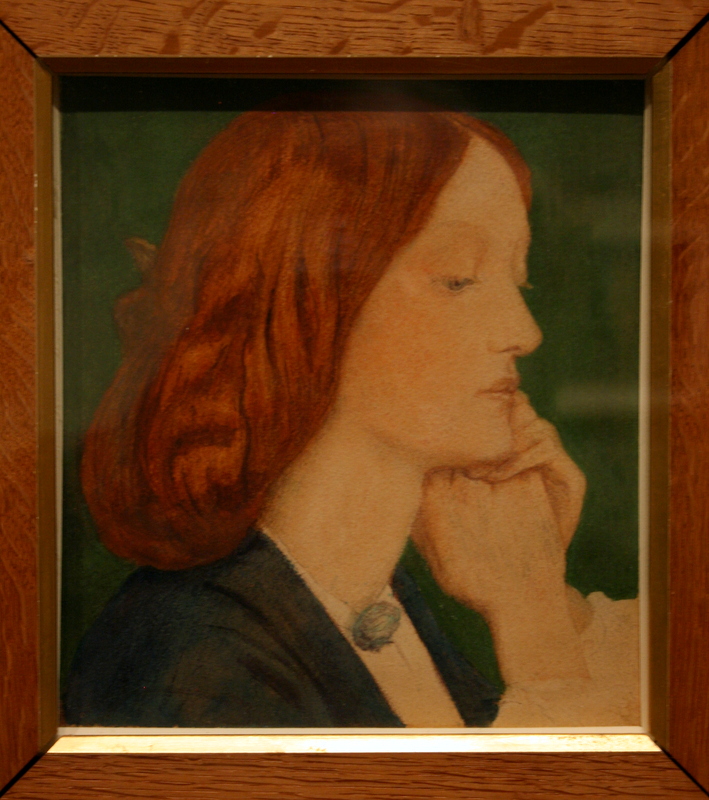


Delaware Art Museum: PreRaphaelites

Waterfall, John Everett Millais, 1853

Waterfall, John Everett Millais, 1853

I just came back from visiting my long time friend, artist Julie Good-Kruger, Pennsylvania.  My most desired destination for this trip was the Delaware Art Museum, which I’d found out, since my last visit, has the largest collection of PreRaphaelite Art outside of Britain.  I brought my camera in and just kept snapping.  Most of these images are pretty good; some have a glare from the lights or had to be taken at an angle to avoid a glare, and some are simply a little blurry.  However, I think they’ll give a taste of why it is so worthwhile to visit this museum.

A Highland Lass by John Everett Millais

A Highland Lass by John Everett Millais

This painting shows Millais’ extraordinary sensitivity and accuracy in rendering his subjects, even when he was a very young man.


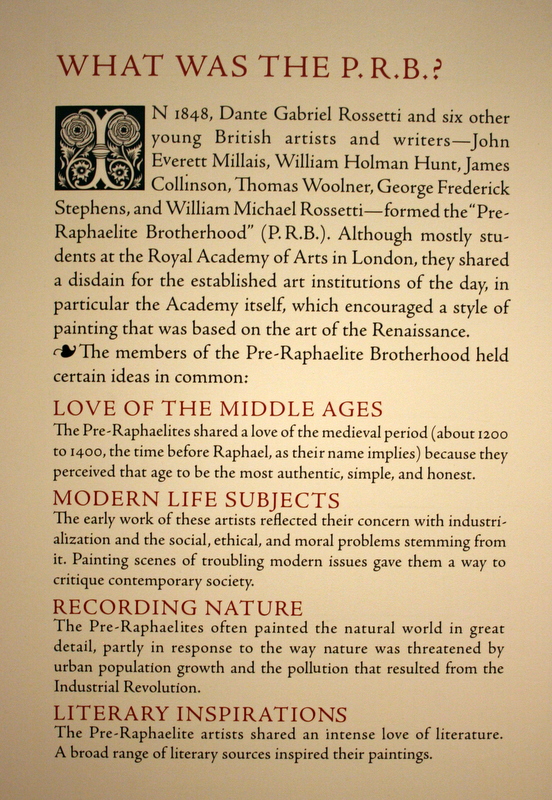
What was the PRB?

What was the PRB?

I’m back on a PRB kick right now and will write more at length about how they inspire me in another blog.  I’m currently rereading PreRaphaelites in Love by Gay Daly and The Legend of Elizabeth Siddal by Jan Marsh, as well as two mysteries inspired by Lizzie.

Portrait of Elizabeth Siddel by Dante Gabriel Rossetti, 1854
Portrait of Elizabeth Siddel by Dante Gabriel Rossetti, 1854

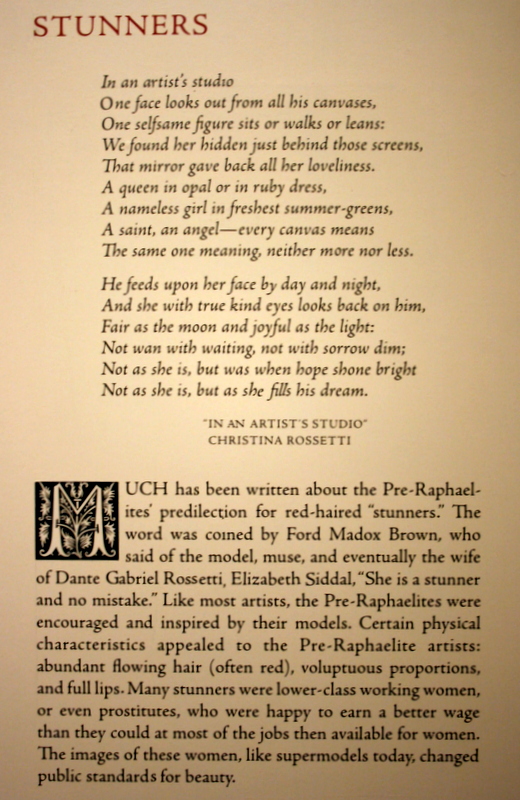
"They're what we call...stunners."

“They’re what we call…stunners.”


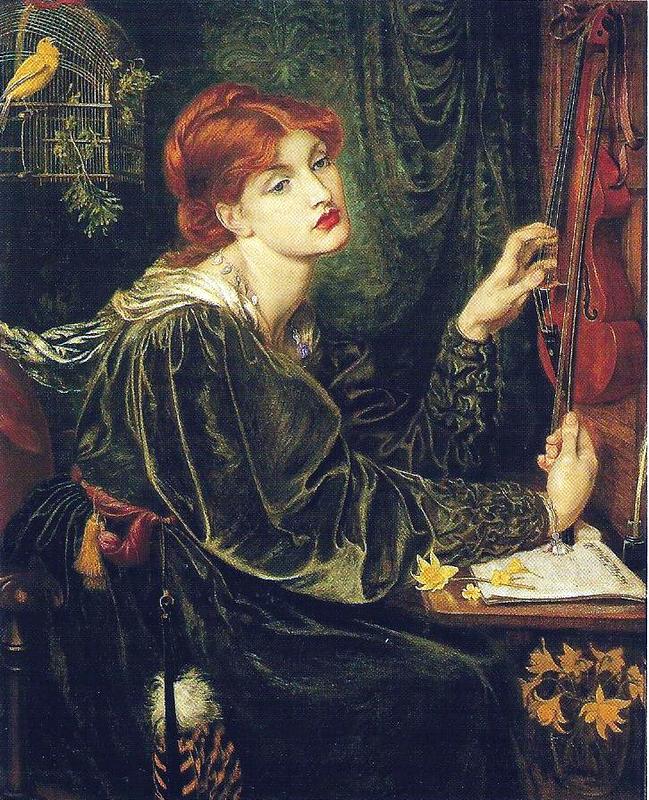
Veronica Veronese, Dante Gabriel Rossetti, 1872

Veronica Veronese, Dante Gabriel Rossetti, 1872

My favorite PreRaphaelites are John Millais and William Holman Hunt.  I saw a fabulous exhibit of Hunt’s paintings at the Minneapolis Art Institute a couple of years ago, when I was at an Equine Painting Workshop.  During my trip to PA, I spent one rainy day companionably working on art projects with Julie and her husband, Tim.  I was copying the painting below because it was raining and windy outside and my plein air plans were dashed.

Isabella and the Pot of Basil by William Holman Hunt, 1867-1868

Isabella and the Pot of Basil by William Holman Hunt, 1867-1868

Found, Dante Gabriel Rosetti, designed 1853; begun 1859

Found, Dante Gabriel Rosetti, designed 1853; begun 1859

This painting shows that Rossetti was at one time as taken up with social justice and narrative art as were Hunt and Millais.  Later, he just painted a select group of beautiful women over and over again.  I find the crusading spirit of the PRBs at their inception far more interesting.

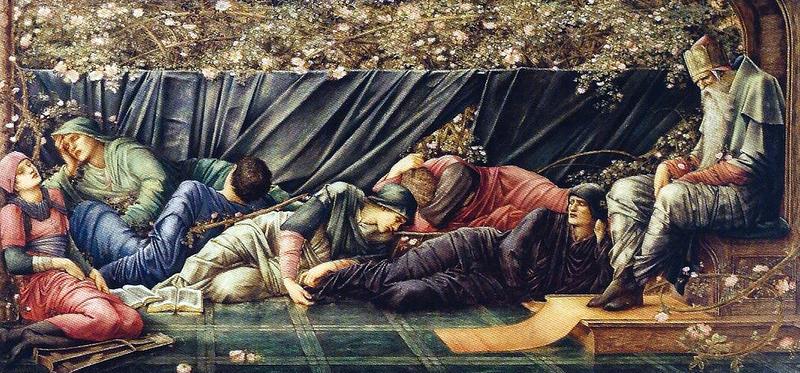
The Council Chamber, Edward Burne-Jones, c. 1872-1892

The Council Chamber, Edward Burne-Jones, c. 1872-1892

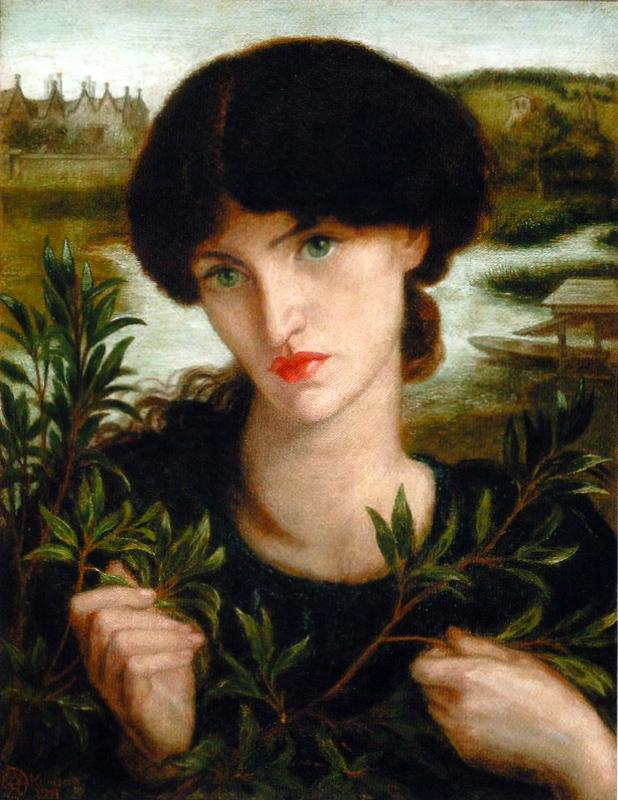
Water Willow, Dante Gabriel Rosetti, 1871

Water Willow, Dante Gabriel Rossetti, 1871


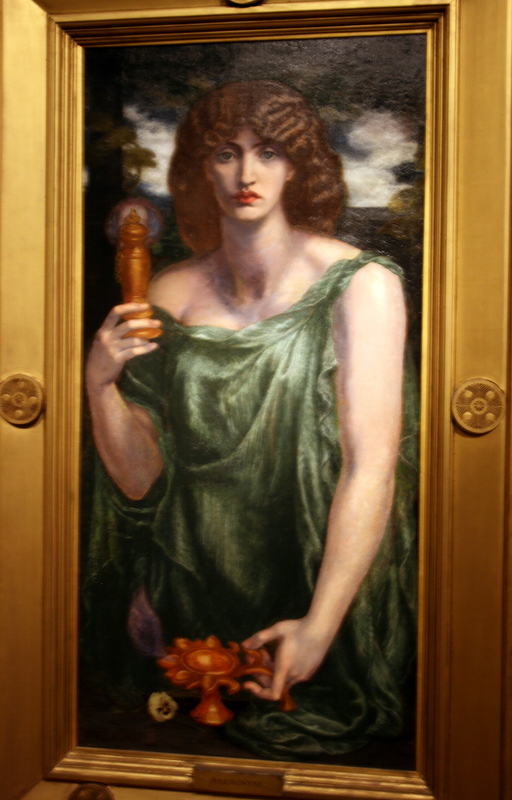
Mnemosyne by Dante Gabriel Rossetti, 1875 -1881

Mnemosyne by Dante Gabriel Rossetti, 1875 -1881

1-IMG_5425

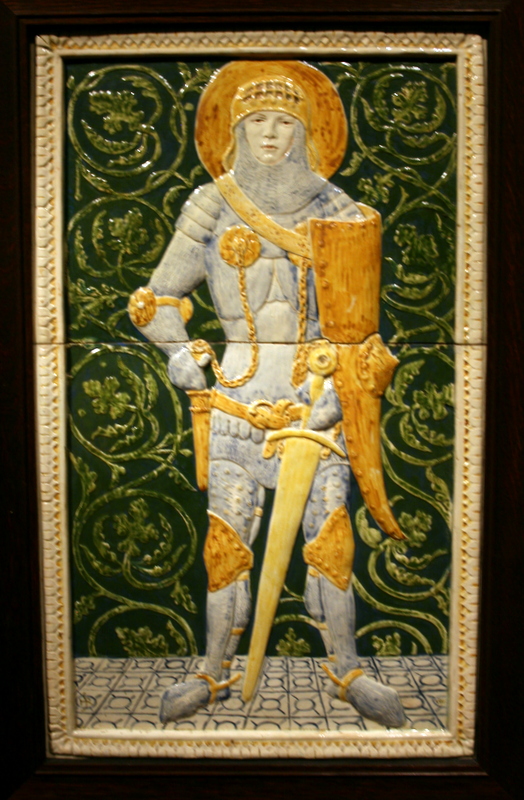
Gideon, glazed tiles by Harold Steward Rathbone, 1900

La Bella Mano by Dante Gabriel Rossetti, 1874-1875

La Bella Mano by Dante Gabriel Rossetti, 1874-1875


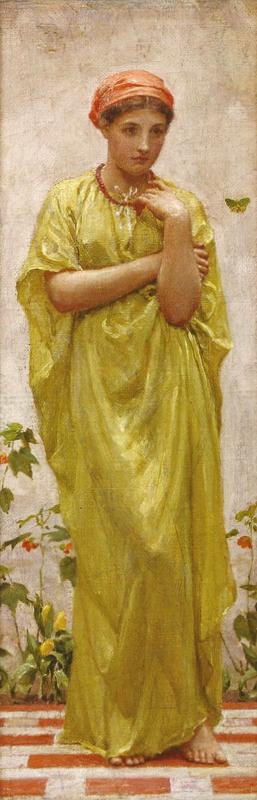
The Green Butterfly, Albert John Moore, c 1878-1881

The Green Butterfly, Albert John Moore, c 1878-1881

The Return of the Dove to the Ark by John Everett Millais, 1851

The Return of the Dove to the Ark by John Everett Millais, 1851

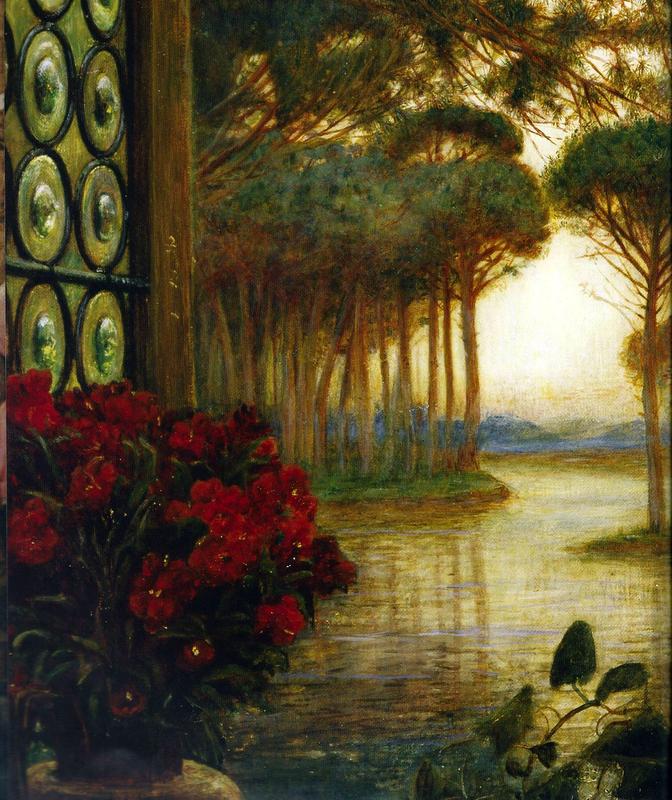
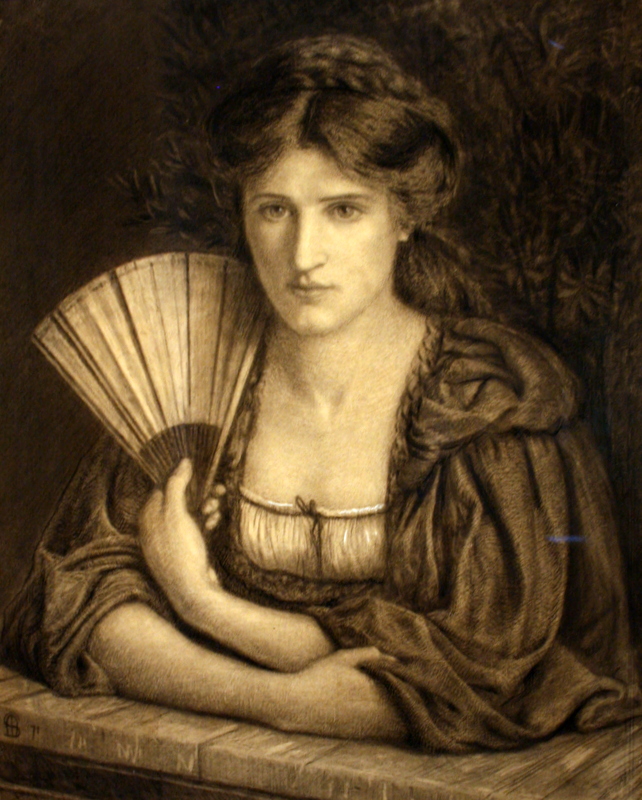
Detail from Love's Messenger, Marie Spartalli Stillman, c. 1885Detail from Love’s Messenger, Marie Spartalli Stillman, c. 1885

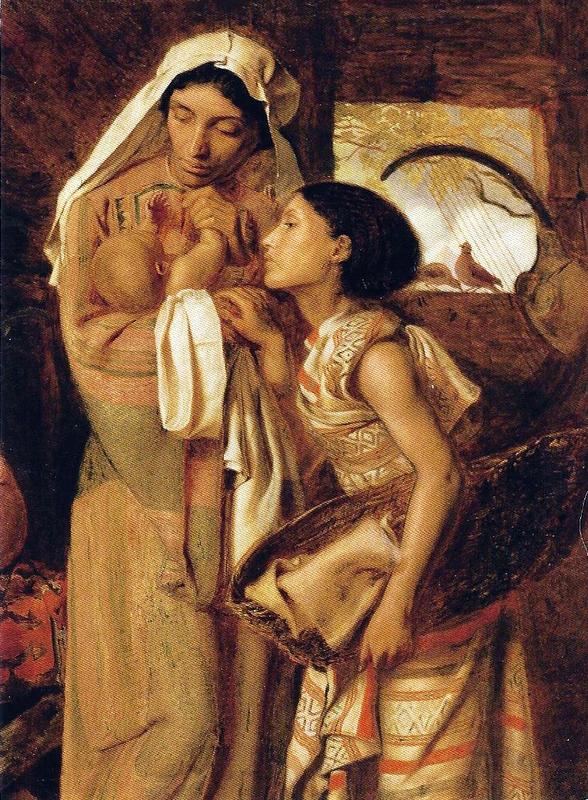
The Mother of Moses, Simeon Solomon, 1860

The Mother of Moses, Simeon Solomon, 1860

Simeon Solomon was Jewish and purposely selected models that looked Semitic for his subject.

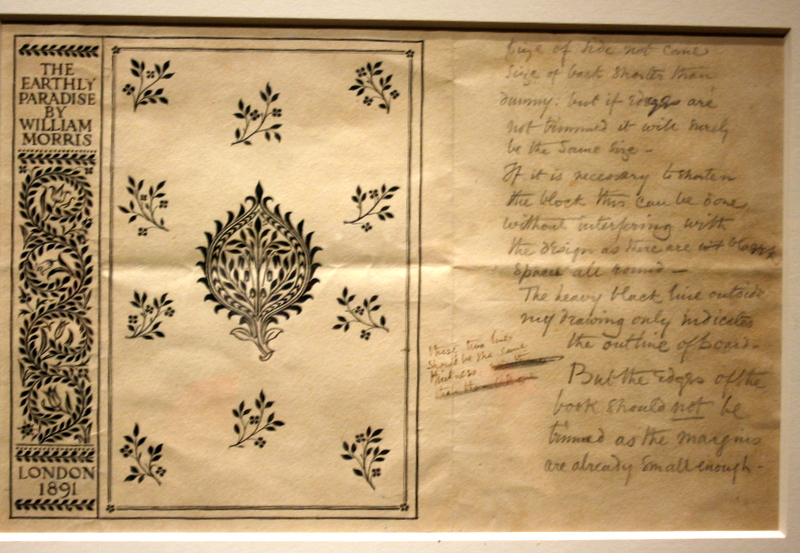
Design for the cover of The Earthly Paradise by William Morris, 1890

Design for the cover of The Earthly Paradise by William Morris, 1890

The Earthly Paradise was a collection of verses that William Morris himself wrote — he was a poet, as well as painter and designer — about pagan Greeks and Scandinavians looking for everlasting life.  Odd bedfellows, I think.

The Somnambulist by John Everett Millais

The Somnambulist by John Everett Millais

The brushwork on this painting is looser than in others if Millais’ paintings.  He is apparently influenced by Whistler’s White Girl in this work.

May Margaret by Frederick Sandys, 1865-1866

May Margaret by Frederick Sandys, 1865-1866


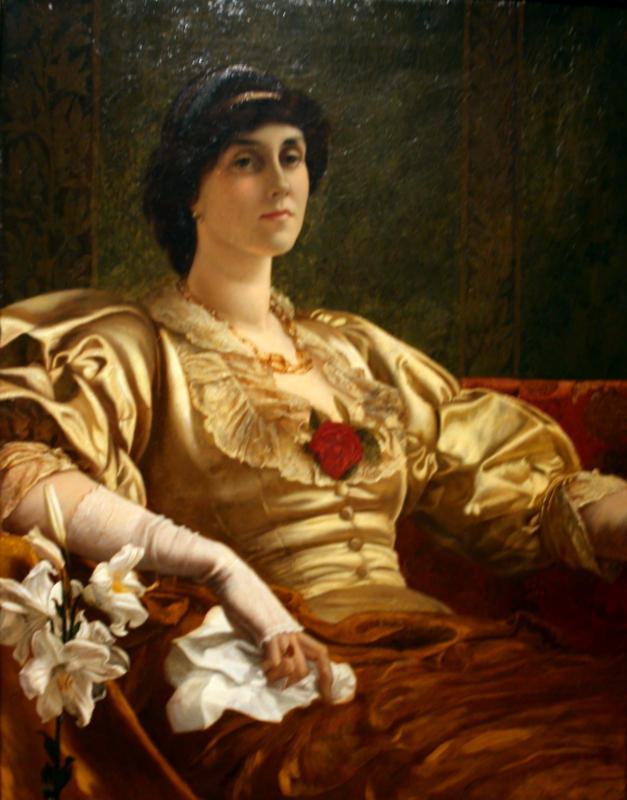
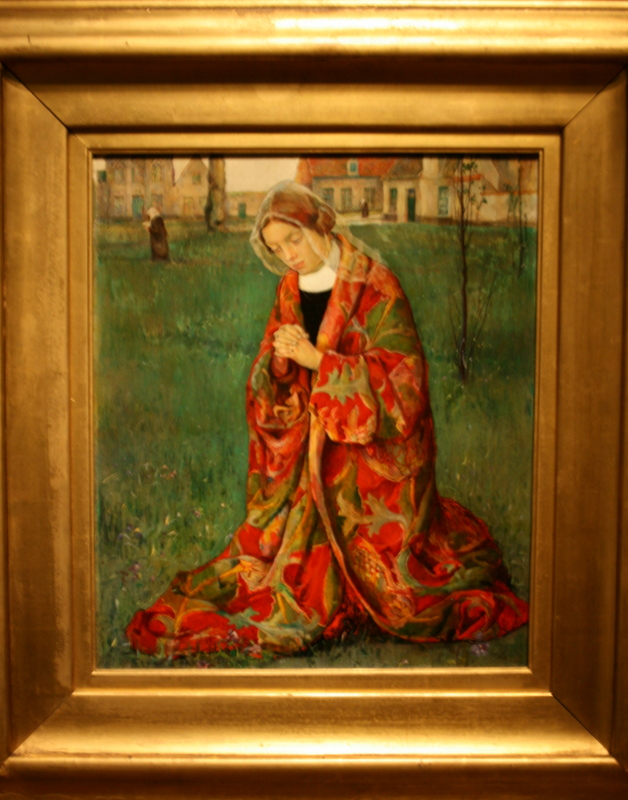
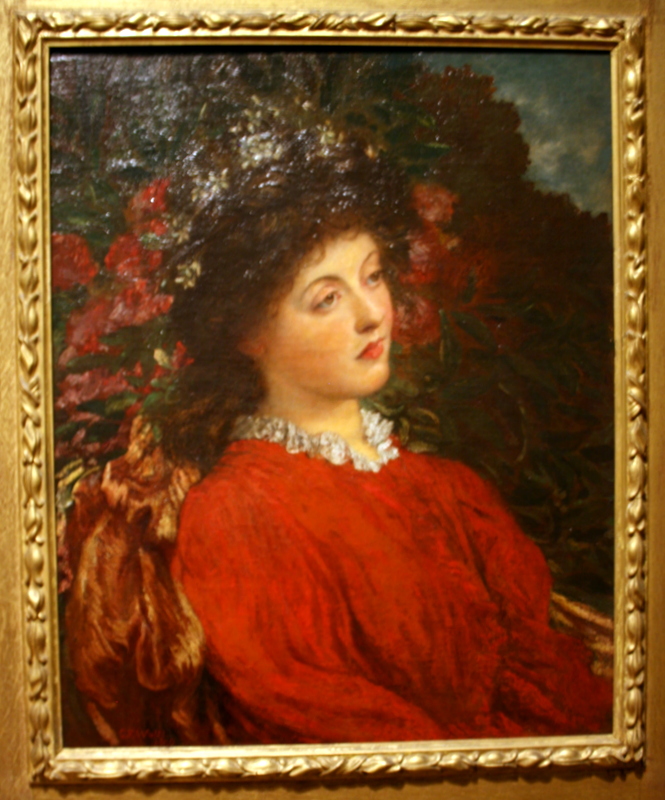
Portrait of Ethel Bertha Harrison by Sir William Blake Richmond, c 1882

Portrait of Ethel Bertha Harrison by Sir William Blake Richmond, c 1882

1-IMG_54722-IMG_54261-IMG_5466

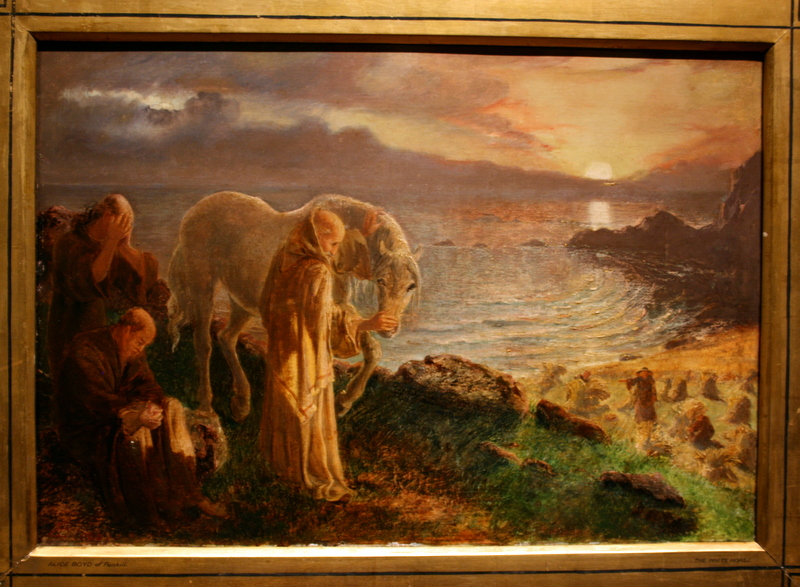
Saint Columba's Farewell to the White Horse by Alyce Boyd

Saint Columba’s Farewell to the White Horse by Alyce Boyd

Detail of Spring and Autumn by Lydia Field Emmet, Delaware Art Museum

Detail of Spring and Autumn by Lydia Field Emmet, Delaware Art Museum

The Spring Witch by George Wilson, 1880

The Spring Witch by George Wilson, 1880

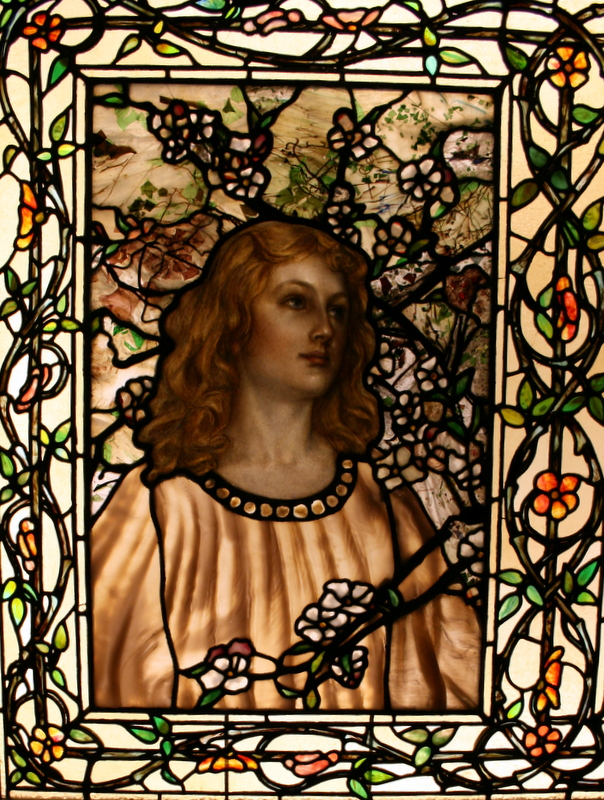
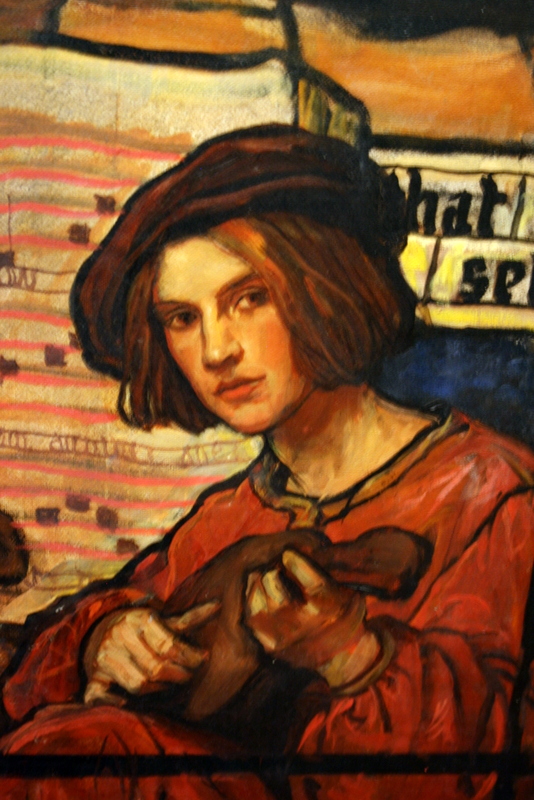
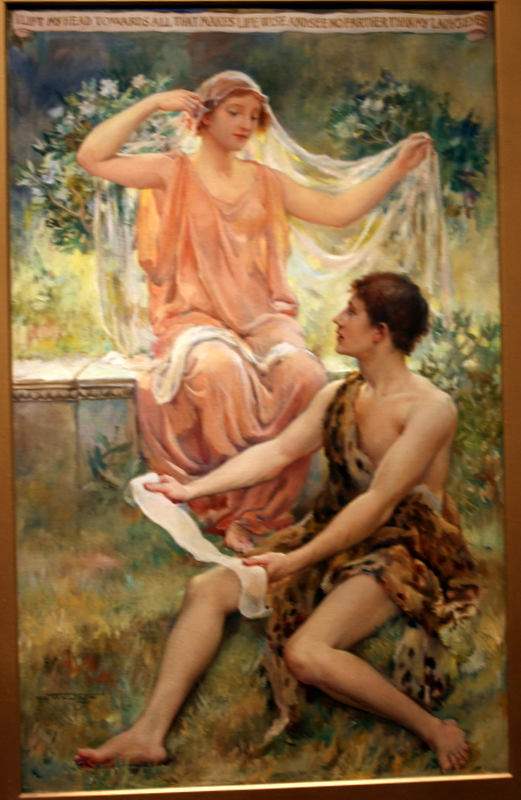
Design for a Stained Glass Window by Violet Oakley

Design for a Stained Glass Window by Violet Oakley

Julie and I just adored this design and just looked and looked.  It’s actually a painting.  The windows that resulted were installed in a manor, but I had only a camera with me, not a notebook.

1-IMG_5561

Amazing British Watercolor

Amazing British Watercolor

This is truly the softest toilet paper we sell!

This is truly the softest toilet paper we sell!

We were snorting with laughter at this painting.  It’s quite lovely, really, but I mean, what can he be showing her?


Marat’s Postmortem and Charlotte Corday

Death of Marat

Marat’s Postmortem

At our last Monday Night Life Drawing Group, Richard wanted to do a Death of Marat pose.  We didn’t have a bathtub, which would have been handy.  On the other hand, a bathtub would have enveloped most of the figure, as it does in David’s painting, so we compromised by laying him out on a bier of pillows and sheets.  Richard called it “Marat’s Autopsy.”  That’s a bit grisly.  I’m calling it a postmortem examination.

I have always loved the painting by Jacques-Louis David.  It is a fine piece of theater painted in the aftermath of Marat’s murder to ennoble the political cause the man and the artist both served.  However, for years I didn’t know who Jean-Paul Marat was, how he died, or anything about the life of David, the painter; I just recognized his technical skill.  Well, now that I know more about him, one could call this great work of art a piece of propaganda.  I still love it as a very effective composition, but I’m not in any way impressed by David’s politics.

Death of Marat by Jaques-Louis David

David stuck with the Jacobin Club through their bloodiest excesses.  He himself voted for the execution of Louis XIV.  Perhaps he honestly believed the fantastical accusations against the King and Queen.  His artistic patronage of Republicanism, however, ran afoul as factionalism that broke it apart.  His Oath of the Tennis Court was never finished:

File:Le Serment du Jeu de paume.jpg

The Oath of the Tennis Court (drawing above) was supposed to portray the same Roman Republican virtues he believed in when he painted the Oath of the Horatii (below),  the unity of men united in the service of a patriotic ideal.  This pivotal event took place in 1789.

The Oath of the Horatii by Jacques-Louis David

By 1792, the unity had shattered.  He painted the Death of Marat in 1793 at a point where art could make only a personal political statement.  Former friends were now bitter enemies.  Marat was murdered in his bath, in which he soaked for hours daily due to a a skin condition from which he suffered, in vengeance for executions of Girondists (see below) by a young woman named Charlotte Corday.  (He was covered in a blistering rash associated with Coeliac’s disease, brought on an intolerance of glutin.)

Charlotte Corday by Paul-Jaques-Aime Baudry

I don’t get all my history from novels — really! — but will cite Michelle Moran’s novel, Madame Tussaud, a blow-by-blow account of the French Revolution, for my first knowledge about Charlotte Corday.  During the reign of terror, a lone woman struck a blow in vengeance for all those murdered by the Montagnards  — Robespierre, Danton and Marat– a radical (bloodthirsty, fanatic) segment of the Jacobins.  She was a Girondin, a more moderate revolutionary.  The Girondins were arrested and beheaded by the Montagnards during the Reign of Terror.

The historical event of Marat’s murder and his assassin’s execution is so distorted by the factionalism of French history, that it may be impossible to get a true picture of Charlotte Corday.

On the plus side, Thomas Carlyle (an English critic of the Revolution) wrote of her in his French Revolution:

She is of stately Norman figure; in her twenty-fifth year; of beautiful still countenance: her name is Charlotte Corday, heretofore styled d’Armans, while Nobility still was … A completeness, a decision is in this fair female Figure: ‘by energy she means the spirit that will prompt one to sacrifice himself for his country.’ What if she, this fair young Charlotte, had emerged from her secluded stillness, suddenly like a Star; cruel-lovely, with half-angelic, half-demonic splendour; to gleam for a moment, and in a moment be extinguished: to be held in memory, so bright complete was she, through long centuries!–Quitting Cimmerian Coalitions without, and the dim-simmering Twenty-five millions within, History will look fixedly at this one fair Apparition of a Charlotte Corday; will note whither Charlotte moves, how the little Life burns forth so radiant, then vanishes swallowed of the Night.

On the negative side:

“Not at all pretty,” a contemporaneous government article put about. “She was a virago, brawny rather than fresh, without grace, untidy as are almost all female philosophers and eggheads … an old maid … with a masculinized bearing … [who] had thrown herself absolutely outside of her sex.

I prefer the former, of course, as the French Revolution appalls me, besides which, I don’t think female philosophers and eggheads need be any more masculine than their fluffy counterparts.

Beauteous or otherwise, Corday was certainly brave.  In Charlotte’s own words:

“I killed one man,” added she, raising her voice extremely, as they went on with their questions, “I killed one man to save a hundred thousand; a villain to save innocents; a savage wild-beast to give repose to my country. I was a Republican before the Revolution; I never wanted energy.”

She went to her execution with a smile on her face and unflagging dignity.

As an aside, another portrayal of female chutzpa and death, I found this painting of Zenobia, the ruler of Palmyra and defier of Roman hegemony, by the same artist, Paul Baudry.

Zenobia Found by Shepherds on the Banks of the Araks River by Paul-Jacques-Aime Baudry

The same scene as depicted by William Bouguereau


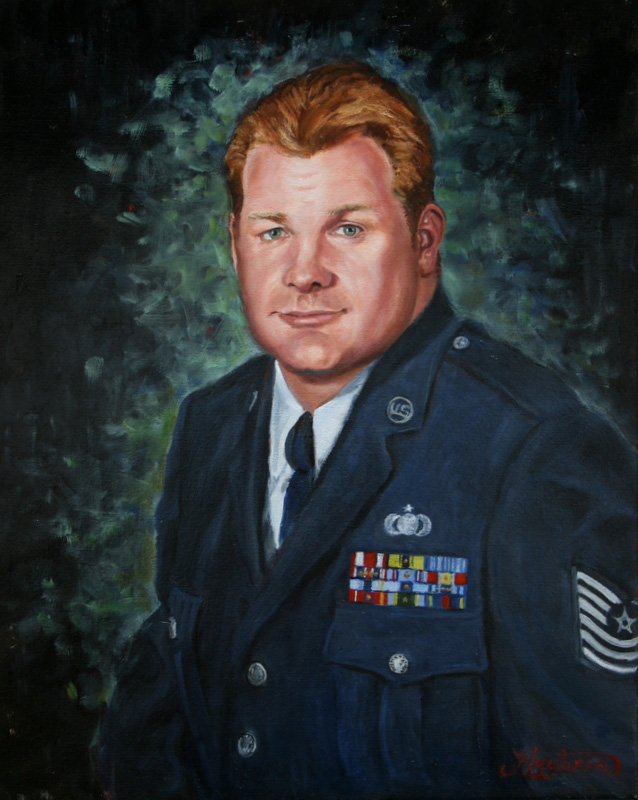
Portrait of John Maattala

Oil Portrait of John Maattala in uniform

Portrait of John Maattala

I was commissioned to do this portrait of my second cousin, John Maatala, in the autumn of 2012, by his widow, Marja-Leena.  I’ve just done some touch-ups on his ribbons and will soon be delivering it to Baxter, Minnesota.   Since they lived much of the time out of the US, I had only met John once.  I liked him very much.  He was a generous, friendly man.  He lent me his book on building saunas and someday I will put those directions to good use.  Sadly, he died in 2011 at too young an age.  I will not have the opportunity to get to know him better.  Let us all cherish the opportunities we have of deepening our friendships with persons we’d like to know.  Life is so uncertain.


Ariadne on Naxos

Ariadne reclining

Ariadne on Naxos

Ariadne on Naxos
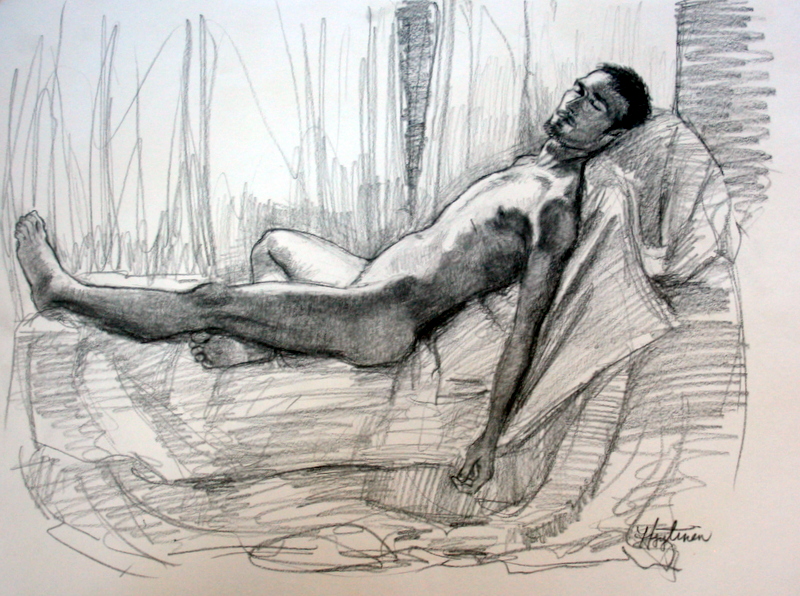
Ariadne on Naxos drawing

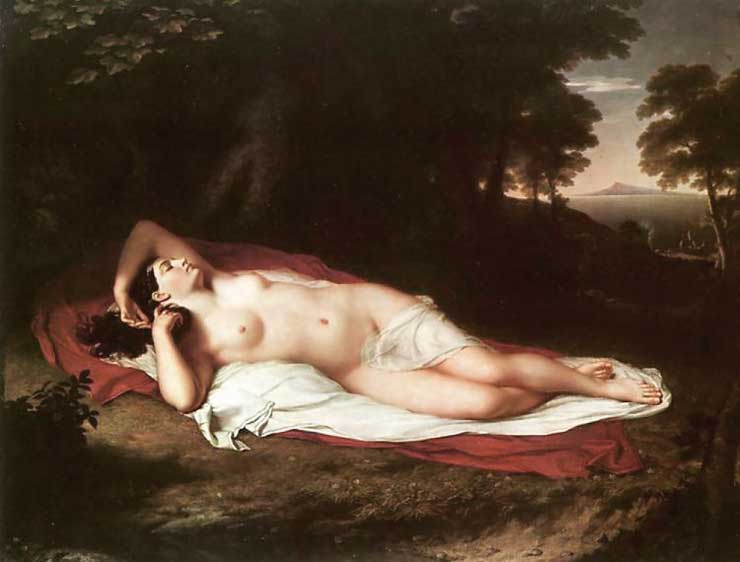
Detail Ariadne Sleeping


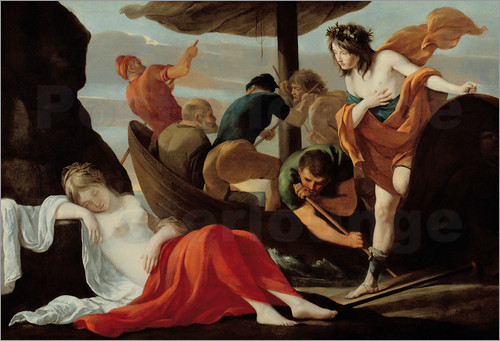
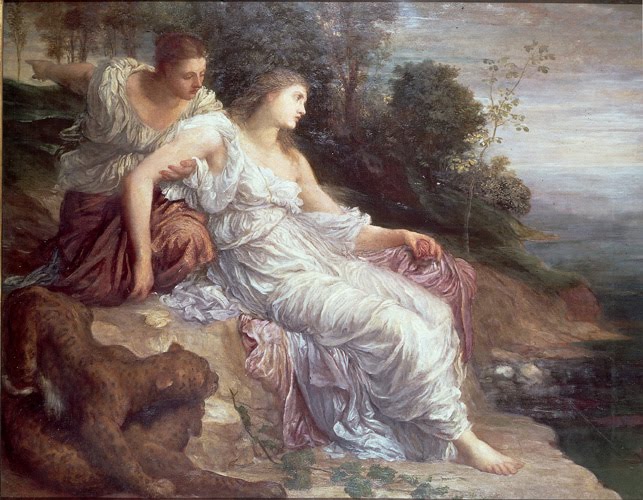
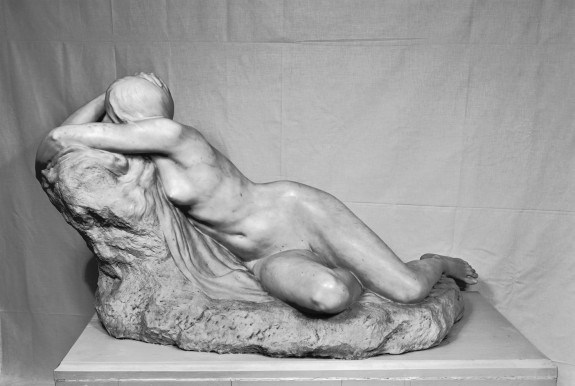
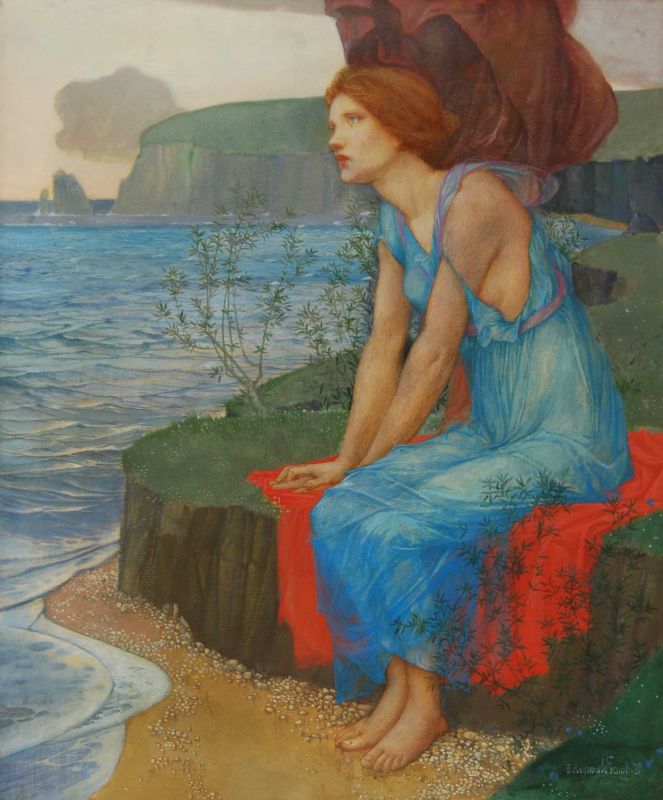
I had some fun on Monday night in our Life Drawing Group.  Our model relaxed into a pose of abandonment that Richard Moninski and I both spontaneously identified as “Ariadne on Naxos!”  Ariadne was the first love of Greek hero Theseus, and the daughter of King Minos of Crete.  According to the myth, Theseus was chosen among seven youths and seven maidens to be sacrificed as bread to the Minotaur, a monster with a bull’s head and the body of man, who lived at the center of a Labyrinth in the palace of Knossos.  Ariadne armed Theseus and gave him a ball of twine to let out as he penetrated the Minotaur’s lair, making it possible for him to find his way out, once he had had a chance to fight for his life.  When he slew the monster and escaped the Labyrinth, Ariadne fled Crete with him across the sea.

It’s at this point where the myth takes several different turns.  One tradition says that Theseus (magically) forgot her on the island of Naxos and returned to Athens, where his father threw himself off the Acropolis, because Theseus in his haste to return home had also forgotten that they were supposed to furl a white sail, instead of black one, if he was alive.  His forgetfulness may have been induced by Dionysis, the Greek God of Ecstatic Experience, because Dionysis desired to marry her himself.  Dionysis is said to have discovered her sleeping, waked her and married her, after which she became immortal, a pretty satisfying turn of affairs for a jilted woman.  Another version, preserved by Plutarch, says that she was pregnant by Theseus, when left behind, and died in childbirth, and still another asserts that she insisted on being put ashore, after which Theseus and the Athenians with him were blown away in a storm.

Ariadne was worshipped on Naxos.  She most likely was a Minoan goddess whose myth got tangled up with the Greeks.  The worship of Dionysis is thought to have originally come from Thrace.

Ariadne on Naxos by John Vanderlyn

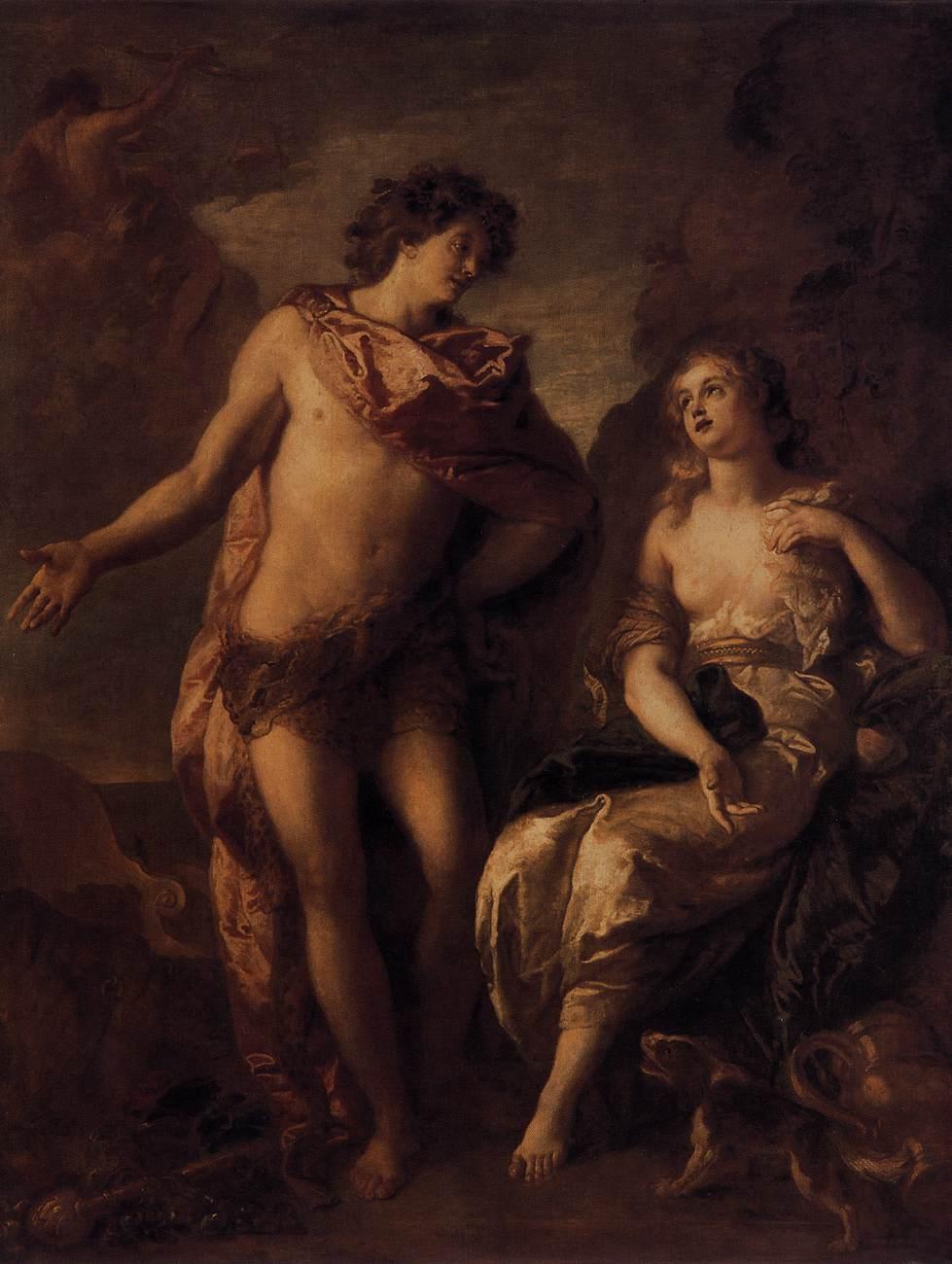
Dionysis discovering Ariadne on Naxos by Louis Le Nain

Ariadne on Naxos by George Frederic Watts

Ariadne Deserted on the Island of Naxos by Hans Schuler

Ariadne by John Waterhouse

Ariadne on Naxos by Edward Reginald Frampton

Bacchus and Ariadne by Sebastiano Ricci

Bacchus and Ariadne by Charles de La Fosse

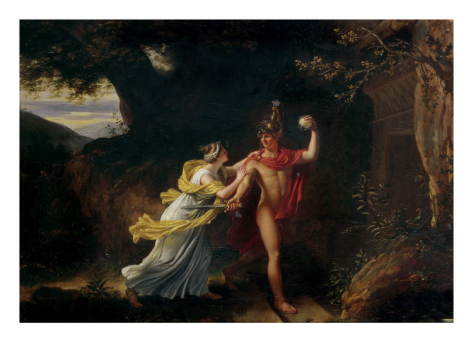
Ariadne and Theseus by Jean Baptiste Regnault

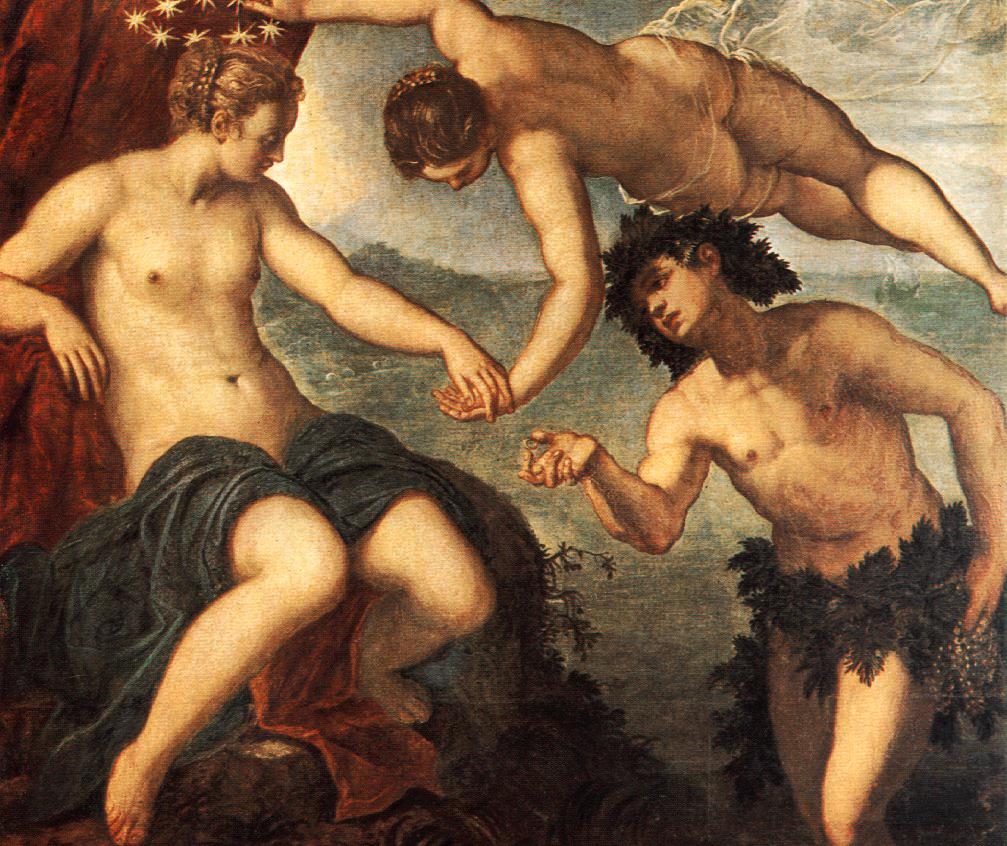
Ariadne, Venus (Aphrodite) and Bacchus (Dionysis)  by Tintoretto

Ariadne on Naxos by Herbert James Draper

Ariadne by Sir John Lavery

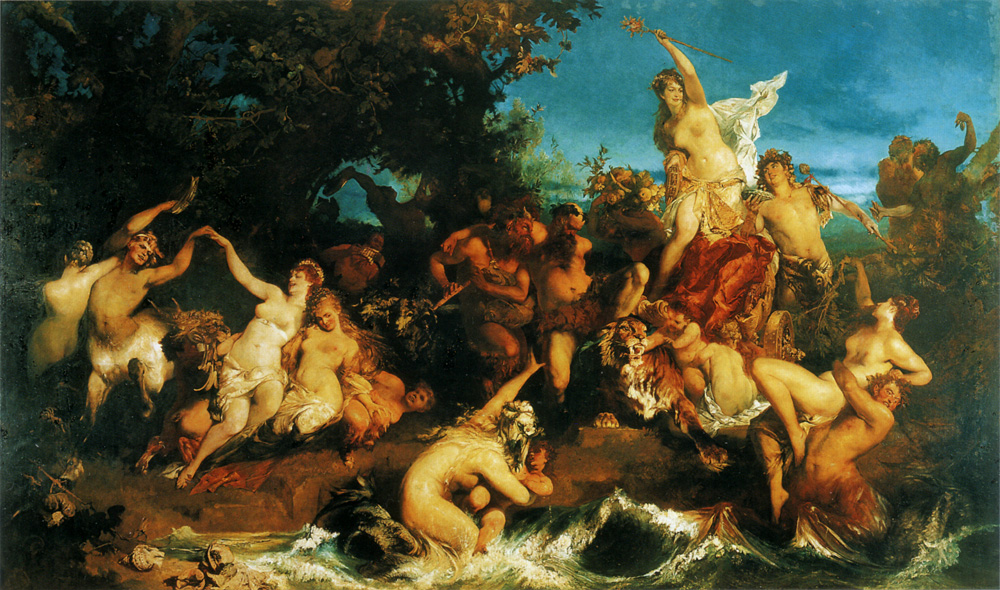
The Triumph of Ariadne by Hans Makart

This is called Flora, but to me she looks like an Ariadne, by John Waterhouse

[Free Paintings]  Titian - Bacchus and Ariadne

Bacchus and Ariadne by Titian


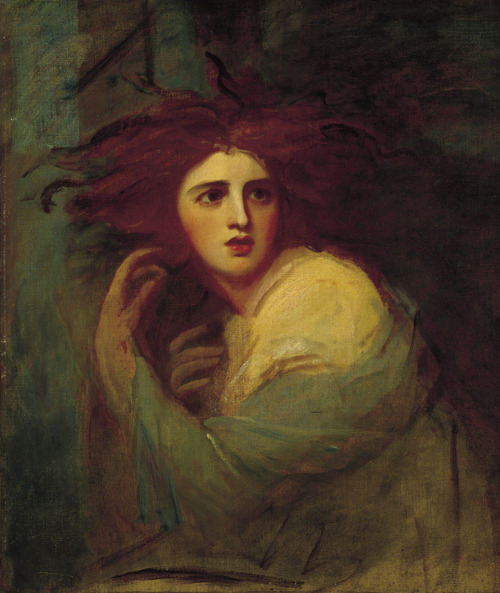
Emma Hart, Lady Hamilton by George Romney


Emma Hamilton as Circe

by George Romney, 1782

George Romney painted over 60 portraits of Emma Hart, Lady Hamilton (nee Amy Lyon) in his lifetime, both nude and clothed, as mythical figures, literary figures, allegorical figures, as a mother.  I know from my late husband’s reading, that Emma Hamilton eventually became obese, so later paintings must have been made from earlier sketches.  For a fuller account of the career of Emma Hamilton, please see Ladies of the Demi Monde and Lady Emma on a blog I just found and love, called The French Sampler.  A few of his most famous renderings of Lady Hamilton are shown here.

George Romney<br /><br /><br /><br /><br />
Lady Hamilton in a Straw Hat (1785)

Lady Hamilton in a Straw Hat

by George Romney, 1782-1784


Emma Hamilton as a Bacchante

by George Romney, 1785

One of the mythical roles in which Romney cast Emma was that of a bacchante.  A  bacchante was the ancient Greek version of a party-animal, a votary  of the god of wine, Bacchus, whose more formal name is Dionysis.  It seems to me that  bacchante describes a more benign, though drunken reveler, and one can see why this mythical role was an attractive one for artists.  They could portray a woman en dishabille and ready to engage in any imaginable impropriety.  A bacchante was also a popular theme in ancient Greek art, often portrayed on vases.

http://www.beazley.ox.ac.uk/dictionary/Dict/image/PentheusMedium.jpg

In ancient Greece, a bacchante had a rather more frightening persona.  She could  be a maenad, the Greek definition of which is “raving one.”  These Greek women, according to myth,  followed Dionysis into the hills, where they would become first ecstatic, in an alcohol and dance induced state, then frenzied and irrational, actually tearing live animals apart in a mob action, called a sparagmos.  The Greek playwright, Euripides, recounts the ritual murder of a King of Thebes, who tries to ban the worship of Dionysis, by his mother and sister, who are under the impression that they’ve just ripped the head off a Mountain Lion.  Lady Hamilton, I’m happy to say, appears to be just a reveler heading for the hills.  She does appear to  have the horns of a goat in her hands though.  I sincerely hope Romney was intending to portray a live goat.  The fact that it’s body doesn’t show in the painting could suggest that it is body-less.  Ghastly thought.

George Romney<br /><br /><br /><br /><br />
Lady Hamilton as Medea

Emma Hamilton as Medea — Euripidean pose, if ever I saw one

A bacchante is an apt alter-ego for Emma Hamilton, however.  Not that she was a drunkard, but in Greek and Roman drama, a maenad or bacchante would abandon their role as wives and mothers (and all roles prescribed for them by men in a sexist society) and become something fearsome and terrible.  Euripides play, the Bacchai (see above), is one of several he wrote that appear designed to make men feel uncomfortable.  (Thomas Cahill comments on this in his Sailing the Wine Dark Sea, specifically discussing Euripides play, Medea.)  Emma Hart Hamilton was a woman of scandal.  She grew up working as a maid, then became a costumer and hair-dresser for actresses, then fell into the role of a hostess of men’s drinking parties.  Some  enterprising and brilliant women have made a career of such a role, holding a salon where intelligentsia, artists, writers and politicians have gathered regularly, women as disparate as Aspasia and  Madame de Stael.  (I read a biography of Madame de Stael when I was in highschool for French class and the only thing I remember from it, alas, is the word and concept of a salon.  A hostess she definitely was, a friend and enemy of the mighty.  Napoleon was her rival.  Even he, however, said, according to the Memoirs of Mme. de Remusat, that she “teaches people to think who never thought before, or who had forgotten how to think.”)

Emma Lady Hamilton as Miranda (1761 - 1815), George Romney

Lady Hamilton as Miranda by George Romney, 1780

Emma Hart didn’t hold the reins of her own fate, however.  Her first lover, a lout who preferred drinking and hanging out with his male friends to her company, jilted her when she became pregnant.  She was then assisted by one of his drinking mates, a Charles Francis Greville, becoming his mistress and a “professional beauty.”  It was at that time that Romney began painting her.  Greville eventually found that his need for a wealthy widow exceeded his need for a gorgeous girlfriend and packed Emma off to Naples to visit his uncle, the English Envoy, ostensibly as a vacation.  Emma was under the impression that Greville needed to travel to Scotland for business.  She was furious to find that he was in fact getting married.  To her good fortune, the uncle, Sir William Hamilton, turned out to be a very sympathetic man, so to speak.  He was anxious to relieve himself of the burden of a penniless relative, Greville, by taking his nephew’s mistress off his hands.  Moreover, he was a widower, in his fifties, fond of female companionship, and, as it turns out, not the jealous type.  It was as Lady Hamilton that Emma eventually met the English Naval hero, Horatio Nelson, and became one of the superstars of British romantic tabloids.  She and Nelson carried on a love affair until his death at Trafalgar.

Emma Hamilton as Miranda from Shakespeare’s Tempest

Sketch for Miranda

Another of Emma Hart as Miranda.  I just came upon a Website that claims she posed for George Romney over 330 times.


http://upload.wikimedia.org/wikipedia/commons/2/2d/George_Romney_-_Lady_Hamilton_as_Circe_2.jpg

Lady Hamilton as Circe, the sorceress of the Odyssey. (See my Blog of Odysseus and Circe, February 3, 2011)

George Romney (1734–1802), Emma, Lady Hamilton, as a Bacchante

Lady Hamilton as a bacchante in a more restful pose

Lady Hamilton as a vestal virgin (ancient Roman priestess)

I so love this painting.

http://3.bp.blogspot.com/-8MJ8DBQ2h48/TjulTwsOMYI/AAAAAAAAAog/19-ppNHqCL4/s1600/EMMAHART.jpg

Detail of Ariadne (see below)

Emma Hamilton as Ariadne, the princess of Crete who helped Theseus kill the minotaur and find his way our of the labyrinth, by George Romney, 1785-86.  Ariadne was later abandoned by Theseus on the island of Naxos, after she went on a wild spree as a bacchante, ironically enough (at least that’s the story Mary Renault tells in her great historical novel, The King Must Die.).  Romney worked both ends of this myth.

Lady Hamilton as Cassandra, the prophetess who foretold the doom of Troy.  “Bad boy, Paris!”

Romney, ''Emma Hamilton as St. Cecilia,'' c.1785

Wow, what a gorgeous painting!  Lady Hamilton as St. Cecelia, the patron saint of music, by George Hamilton

Emma Hamilton was “the definitive contemporary incarnation of timeless beauty,” according to The Judgement of Paris, a forum for discussing topics related to plus sized beauty, which I read for a detailed blog of Emma’s career as the English beauty of her age.  This blog entry is really good; I highly recommend it.  Even though she ate commensurately with her appetite and complacently watched her figure become more “Olympian” as time went on, hers was not an age when emaciation or androgyny was admired in women.  It was NOT the fashion.


George Romney<br /><br /><br />
Lady Hamilton as the Magdalene</p><br /><br />
<p>&#8220;Nothing was more curious than the faculty that Lady Hamilton had acquired of suddenly imparting to all her features the expression of sorrow or joy, and of posing in a wonderful manner in order to represent different characters. Her eyes alight with animation, her hair strewn about her, she displayed to you a delicious bacchanale, then all at once her face expressed sadness, and you saw an admirable repentant Magdalene.&#8221; – Élisabeth Vigée-Lebrun<br /><br /><br />

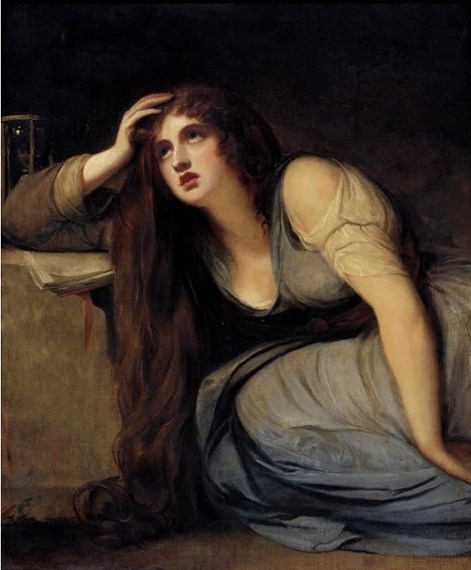
Lady Hamilton as Mary Magdalene by George Romney

George Romney<br /><br /><br />
Lady Hamilton Praying (1782-86)

Lady Hamilton Praying by George Romney

George Romney made Emma Hamilton famous.  Even though she didn’t live in England for much of her life, but rather in Naples, he used his early sketches as material for later compositions.  William Hamilton also invited artists from all over the world to come paint his wife in Naples.  As a connoisseur of antiquities and objets d’art, he enjoyed seeing his wife’s beauty celebrated.

                                                                    Lady Hamilton as a Bacchante, after Louise Elizabeth Vigee-Lebrun by Henry Bone
Lady Hamilton as a Bacchante by Elizabeth Louise Vigee-Le Brun
and three more by Romney (below).  I haven’t been able to figure out what the last one is, Cavalier or Puritan?

Emma, Lady Hamilton by George Romney, 1785


Romney, ''Emma in Morning Dress,'' c.1782-85

Alphonse Mucha: Much More Than You Think

The Festival of Svanlovit:  When the Gods are at War, Salvation is in the Arts by Alphonse Mucha

The Oath of Omladina under the Slavic Linden Tree by Alphonse Mucha

Alphonse Mucha may be an artist you’re familiar with from art cards, featuring beautiful women and flowers, such as the image below, or fin-de-siecle theatre posters from Paris.

As I found out at the Mucha Exhibit at the Czech Museum of Cedar Rapids, IA  (through December 31, 2012), Alphonse Mucha was not only a leading figure of European Art Nouveau style, but an artist with serious philosophic ideals about the power of art in historic terms.

“As the 19th century drew its close, the belief that mankind was on the verge of breaking open a path which would lead to the fulfilment of its highest destiny,…was widely held by philosophers and artists alike….This noble and idealistic theory was in part a positive response to the unprecedented advances in both technology and economics at the time.  It was also, however, an expression of an intention to move beyond the facile materialistic slogans which greeted this progress and to focus on the real human and social dimensions involved.  Art was to become the tool to educate the masses, using for this lofty purpose every gift of sensuality at its command.”  All quotations, unless other wise indicated, are from  “A Complete Vision,” by Petr Wittlich,  from Alphonse Mucha, Sarah Mucha, c. 2005, Francis Lincoln Ltd.

This was a theme already sounded in Britain by John Ruskin and others, spawning the Arts and Crafts Movement in Britain.  In terms of Decorative Art, it is most famously expressed by William Morris.  “Have nothing in your house that you do not know to be useful, or believe to be beautiful,” is the theme most often quoted, but the Arts and Crafts philosophy went deeper than that.  Morris also said, “Nothing should be made by man’s labour which is not worth making, or which must be made by labour degrading to the makers,” and “We are only the trustees for those who come after us.”  Art Nouveau is the last flowering, if you will, of the creative explosion spawned by Arts and Crafts.  The inspiration was to improve he lives of ordinary people by transfiguring their homes and lives through art.

Alphonse Mucha became famous overnight, when he won a design competition to create posters for Sarah Bernhardt, the superstar of the Parisian stage.  He created a poster for her role in Gismonda.

Paris was the capital of Beauty, then as well as now, and though it may be difficult to imagine how a poster could make an artist a celebrity overnight, one must recognize that this was a world without the Internet and television.  There was the theatre; there was the Belle Monde, the world of high society and fashion, and there was art.  While those things were important in all the major cities of the world; they had especial power in Paris.

The thing that set Mucha apart was how positive it was.  Contrast Mucha’s Gismonda with posters by Toulouse-Lautrec.

…or

Toulouse-Lautrec was painting prostitutes and performers at the Moulin Rouge.  The Belle Epoque, or beautiful era, was a period of peace and prosperity following the Franco-Prussian War and another of those reigns of terror that Paris seems to specialize in, this one called the Commune.  There was an explosion of art in the Belle Epoque, but one can see in Toulouse-Lautrec the influence of these scarifying events.  Mucha’s vision in Gismonda is “the antithesis of the morbid, effete and diabolical females, who populate the contemporary works of Toulouse-Lautrec, … Beardsley, Klimt” and others.

“Mucha’s vision is unique among the art of his time.  The Symbolist sensibility that so heavily influenced late 19th century art, including Decorative Art, combined large elements of decadence, pessimism and dislocation.  It was alarmed by the the threat to the individual and to cultural traditions posed by science and technology, even while it adopted the new means that they provided for artistic expression.   By the same token it was deeply uneasy over the materialistic society that technology spawned….It…embodied a puritanical sense, no doubt inflamed by the rapidly changing role of women, that seated evil in women’s irresistible sexual allure, personafied artistically in the misogynistic image of the femme fatale.  Its portrayals of the female were typically highstrung and uneasy, often hysterical, sometimes nightmarish and horrific….There, in contrast, stood Mucha and his irrepressible optimism and vitality and the Mucha Woman who, nearly alone among the representatives of female figures of the period, is neither demonic nor dissipated.  Her glow of happiness and the hint of some hidden message, her suspension between this world and another, the integration in her person of Madonna and Venus, express a unique and joyous intuition.”

Prophetess by Alphonse Mucha

Woman with a Burning Candle by Alphonse Mucha

Madonna of the Lilies by Alphonse Mucha

Spirit of Spring by Alphonse Mucha

Biscuit Tin by Alphonse Mucha

Design for Documents Decoratifs

from Documents Decoratifs

“Mucha’s highly spiritual and moral purpose during his Art Nouveau period is further shown in a small number of works on specifically spiritual topics,” among them his limited edition book, illustrating his interpretation of the the Lord’s Prayer, named Le Pater (see below).  “The artistry represents Mucha at his best — finely wrought, detailed images and complex, sometimes hidden, geometric systems of symbolism.  What is especially striking is how far his commentary and illustrations deviate from (recognizable) Christianity in favour of a neo-platonic spiritualism.  The illustrations on the text clearly depict the striving of man toward the inspiration of divine light and the presence of idealised intermediating forms that are surely nothing less than the ‘great soul of the world,'” the underlying vision of Mucha’s creative output.

A commission to design the interior of the Pavilion  of Bosnia-Herzegovina for the Paris International Exhibition of 1900, led to an inspiration that dominated Mucha’s labor for the rest of his life.  Slavic submission to Germanic rule, a fact that Mucha found difficult to celebrate in itself, was resolved “by transforming the interior into a celebration of southern Slav aspirations and folk traditions.”  Mucha “traveled widely through the Balkans researching their history and customs.  From this experience sprang the inspiration for a new project,…the creation of a series of vast canvases that would portray the epic of the Slav peoples,…a mythic and idealised history that would emphasise their common bonds, their mutual reverence for peace and learning and their struggle against oppression.”

Generous to a fault towards the friends, artists, writers, musicians, and countrymen who crowded his weekly salon, Mucha had to find a patron for  the Slav Epic venture, because he was in no financial state to undertake it on his own,  It took him some time, but eventually an American millionaire named Charles Crane, not only funded him, but provided emotional sustenance, due to his shared interest in Slavic culture, for the next twenty years.  Mucha returned to Prague, leaving the prosperity, renown and glamour of his life in Paris, to dedicate himself to the creation of the mammoth series of canvases known as the Slav Epic.

The Slavs in Their Original Homeland, “Between the Turanian Whip and the Sword of the Goths” by Alphonse Mucha

Svanlovit Festival on the Island of Rugin by Alphonse Mucha

The Coronation of the Serbian Tsar Stepan Susan as East Roman Emperor by Alphonse Mucha

After the Battle of Grunwald, the Soldiarity of the Northern Slavs by Alphonse Mucha

The Printing of the Bible of Kralice in Ivancice by Alphonse Mucha

“The Kralice Bible was translated and printed at the end of the 16th Century by the Unity of Brethren, who had established a school in Ivancice, Mucha’s hometown.  This painting is a homage  both to Ivancice and to the work of the Brethren.”

The Abolition of Serfdom by Alphonse Mucha

The Apotheosis of the Slavs by Alphonse Mucha

The Slav Epic and other patriotic creations of Mucha have been misunderstood.  “His evident intent is to inspire his countrymen with a symbolistic evocation of their past and invocation of their highest values.”  However, “just as his Decorative creations have been miscast as merely commercial, his patriotic efforts have been abjured as jingoistic.  Mucha was a patriot, but he was no chauvinist….Mucha believed in the destiny of nations and sought to spur his nation to fulfil its destiny by appealing to what he conceived as its best and highest innate virtues….He persevered for nearly thirty years after his return to Prague, pouring himself into innumerable public and humanitarian causes, labouring over the massive canvases of the Slav Epic and persisting in the face of unceasing disdain for his art and criticism of his values.  At the end of the 1930s, as he looked back upon a life span of nearly 80 years, the Decorative art that had been the fount of his fame and glory had all but disappeared from the public scene, the patriotic values that he held so passionately had become an anachronism and the great Epic that had been the capstone of his life lay rolled up in a dank museum basement, homeless and largely forgotten.”

Even though one cannot travel to Prague, or any major city in Czechslovakia, to view Mucha’s Slav Epic, but would have to journey to the small town of Moravsky Krumlov, where Mucha livedl.  Alphonse Mucha is an artist that deserves much more publicity.  The Alphonse Mucha Exhibit at the Czech Museum in Cedar Rapids, IA is a great opportunity to see his wonderful paintings.  It is WELL WORTH IT!  There’s only about a week left, but go!