Author Archives: Nona

The Wanderer

The Wanderer, Oil on Canvas, 20x24

The Wanderer, Oil on Canvas, 20×24

Earlier in the spring, when I brought the boat up to our cabin, I asked my friend, Sandy, to model my Finnish folk costume.  She modeled near the stone wall that Neal Peterson located for me on Knapp Road and by this marshy, woodland lake.  This image of a lonely figure walking near water reminded me of The Wanderer by Jamie Wyeth, after which this painting is named:

I have wanted a Finnish folk costume for years, but couldn’t afford to buy one.  When I was in Finland in 2000, a Southern Ostrobothnian costume cost over $2000!  This year we had our International Family Reunion for the descendents of Antti and Tilda Olli and I decided I’d try to put something together.  I found the skirt on E-Bay — I think it’s the very one I tried on at Vuorelma Oy in 2000 — and it was in my size!  That was all I could find though.  I decided I’d go ahead and have the rest of the costume made for me.  Deb, at Deb’s Fashions to Fit in Platteville, WI, made me a vest.  I happened to have the Emerald Green apron required from an Austrian Dirndl I’ve grown out of.  For a blouse, I bought a Bunad Blouse from Open House Imports in Mount Horeb, WI.  Geneia’s costume was harder, because the vertically striped, wool skirts worn in Finnish costumes proved impossible to find.  There weren’t any ready-made on E-Bay for her, so I started shopping on Etsy.  What I finally found was wool fabric woven in Latvia for folk -costumes there.  I chose it because the Livonians, who wore this patterned wool, are a Finnic people and speak a related language.  Deb sewed Geneia’s skirt, patterned after mine.  We altered an Austrian vest, making it tie down the front, added my grandmother Selma’s apron and another Bunad Blouse.  Kalevala Koru jewelry completed our outfits.

Our Finnish Costumes

Our Finnish Costumes at the Olli Family Renuion

Sauna Girl

Sauna Girl

Sauna Girl, Oil on Canvas, 8×10

I did these paintings earlier in the spring, but hadn’t blogged them, because my connecting cable to upload pictures from my SLR to the computer stopped working, and it’s taken me this long to get a new cord.  I had pix on my camera, but they weren’t really high enough resolution.

Afternoon Sauna

Afternoon Sauna, Oil on Canvas, 9×12

For those of you who don’t follow Rosewind Studio on Facebook, where I’d posted these before, we had an absolute hoot taking pictures.  The snow was melting, so we had to work fast.  My daughter was out there trying to stand in the snow, first lifting one foot and rubbing it vigorously on her calf, then the other, while the pugs kept trying to get in the picture and we kept laughing, because it was broad daylight and we were just out in our yard.  (We live on the edge of town, so the view South is fields and woods, as in the paintings.)  She had a swimsuit on under the beach towel, by the way.  Sauna Girl is for sale at the McGregor Marquette (Iowa) Art Center and Afternoon Sauna is for sale at Phoebe’s Nest in Mineral Point (Wisconsin).

Utah Museum of Fine Art, Salt Lake City,….including Hiking

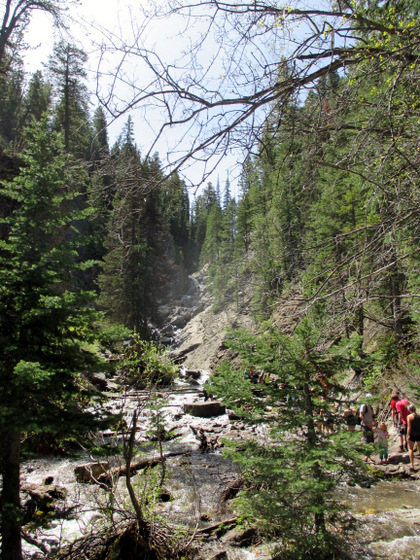
Little Cottonwood Canyon Trail

Little Cottonwood Canyon Trail

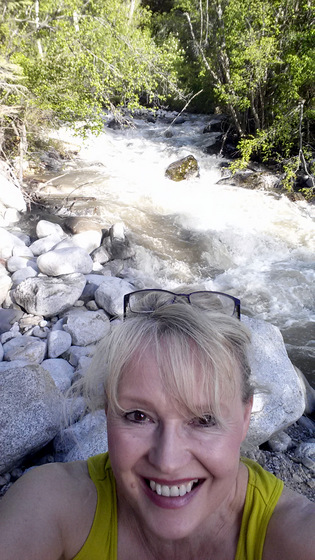
After our Lands’ End Fit Event in St. Petersburg, FL, we took an early morning flight directly to Salt Lake City for a one day Event at Waterford School in Sandy, a south side community.  I had had no sleep whatsoever after our late night eating and walking around hopping St. Petersburg, where there is plenty of night life, so my eyes felt like gravel.  We were arriving in Utah on a Saturday, however, and we weren’t setting up until Sunday evening, so I was determined not to waste a minute.  I asked a very helpful young man at the front desk of our Sandy Hampton,  “Where could I find the closest mountain hike to the hotel?” and subsequently drove ten minutes to be in the mountains and another ten minutes to a roadside parking space.  There was no signage, so I didn’t actually know whether I’d reached my destination, but it didn’t seem to matter.  I stepped out of my car and down a decline between trees to paradise.  Ahhhhh……..

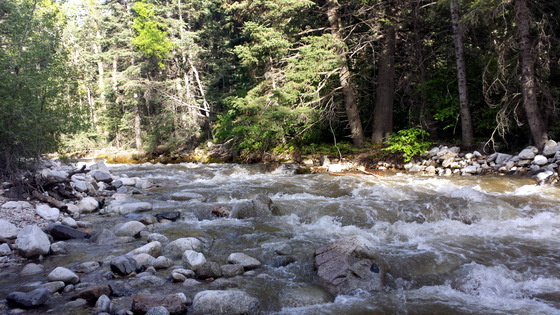
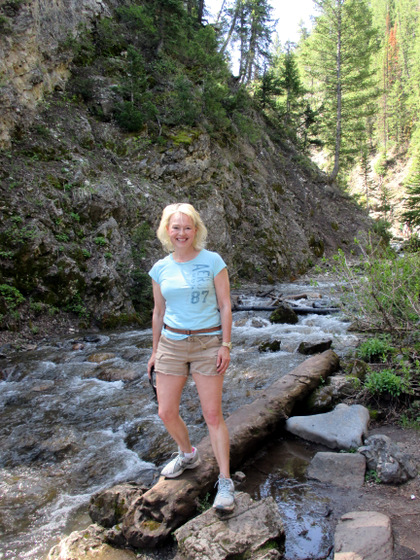
Little Cottonwood Canyon Creek

Little Cottonwood Canyon Creek

The air was filled with that indescribably delicious scent of water molecules being pulverized on stones and the whoosh of a rushing current.  All stresses and tiredness fell away.  “Why do I live in Wisconsin?” I wondered.  I walked along this creek back and forth for about an hour.

Donut Falls Trail

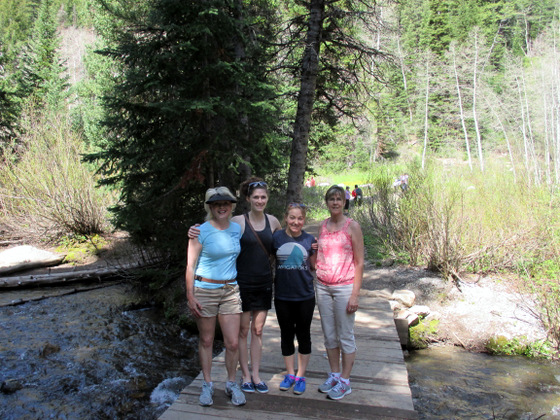
Donut Falls Trail with (from left to right) Nadine, Kelli and Chris

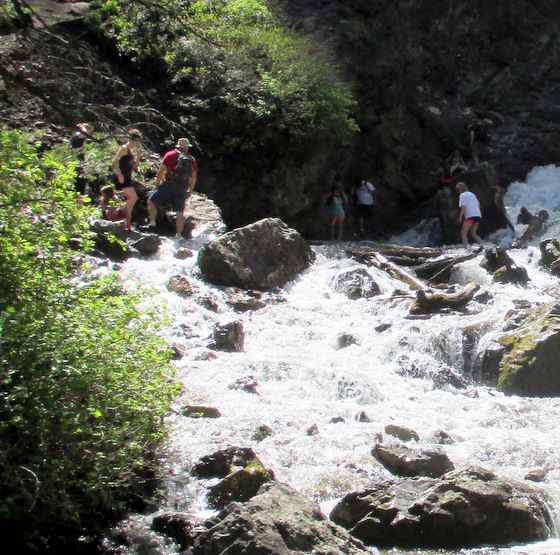
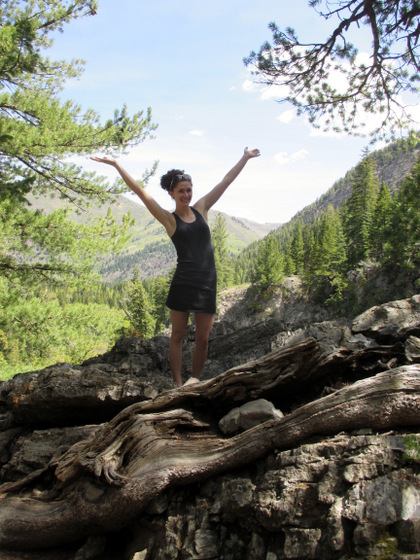
The next morning I was joined for another opportunistic hike by three of my coworkers from St. Petersburg.  We were looking for a longer hike, so again, the very nice young man at the front desk made another recommendation.  We drove up another watershed gorge, Big Cottonwood Canyon, to Donut Falls Trail.  Donut Falls cascades through a hole into a cave below.  We found when we got there, however, that to reach it one must walk along a precipitous embankment on either side and it is impossible not to get one’s feet wet.  That doesn’t sound like much of a problem and if I’d had my Gortex lined hiking boots on, I wouldn’t have hesitated, but I was wearing tennis shoes, the only walking shoes I had with me on the trip; I already had one blister and was forming another.  For bare feet, the water was numbingly frigid and the rocks were sharp, the embankment muddy and fallen logs slippery.  Falling seemed a likelihood, so I chose the better part of valor and watched as the Nadine and Kelli showed their mettle and scaling the rest of the gorge.

The Path to Donut Falls, Wasatch National Forest

Nadine and Kelli are up there somewhere.

Nadine and Kelli descending on left, Donut Falls

Nadine and Kelli descending on left, Donut Falls

Donut Falls Trail

Donut Falls Trail, from lower downstream

Kelli on the Donut Falls Trail

Kelli on the Donut Falls Trail

Nadine above Donut FallsNadine above Donut Falls

Little Donut Falls Trail

Little Donut Falls Trail

We thoroughly enjoyed ourselves and got back just after noon, so the next stop for me (of course) was The Museum of Fine Art on the Utah University Campus.

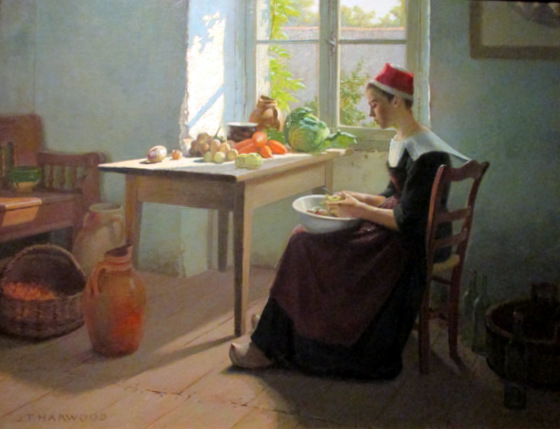
Preparations for Dinner, James T. Harwood, 1890

Preparations for Dinner, James T. Harwood, 1890

It’s fitting that I should begin with a painting by an artist from Utah, who studied in France, eventually being accepted to exhibit in the Paris Salon in 1892.

Forest Hill (Booneville, Missouri), George Caleb Bingham

Forest Hill (Booneville, Missouri), George Caleb Bingham

Along the Hudson, Thomas Doughty, 1852

Along the Hudson, Thomas Doughty, 1852

Silvery Night -- Ralph Albert Blakelock, late 19th Century

Silvery Night — Ralph Albert Blakelock, late 19th Century

Pastoral Landscape with Fisherman, Thomas Cole, c. 1826

Pastoral Landscape with Fisherman, Thomas Cole, c. 1826

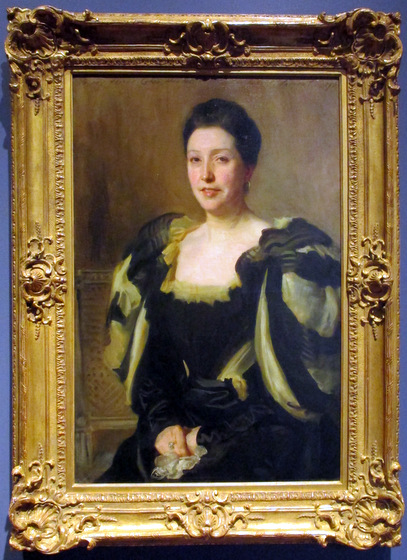
Portrait of Mrs. Colin Hunter, John Singer Sargent, 1896

Portrait of Mrs. Colin Hunter, John Singer Sargent, 1896

The subject of the painting is Isabella Rattray Young.  She was a pianist who married a British marine artist who belonged to the Royal Academie,…I mean Academy.  I have to remember which country he was in.

Connecticut Scene, Julian Alden Weir, ca. 1910

Connecticut Scene, Julian Alden Weir, ca. 1910

I’d buy this painting, if I just happened to run across it, and it wasn’t in a museum, and I could afford it.

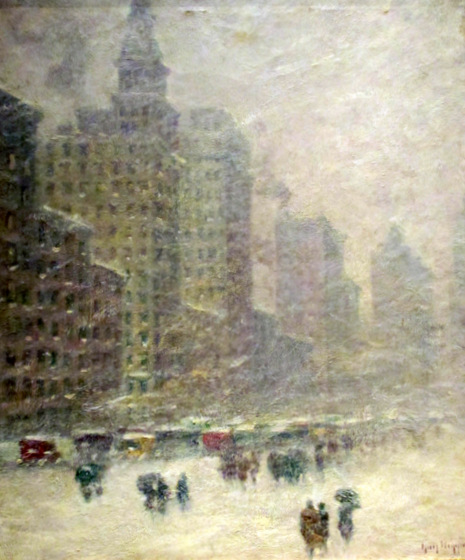
Michigan Boulevard, Winter, Guy Carleton Wiggins, 1924

Michigan Boulevard, Winter, Guy Carleton Wiggins, 1924

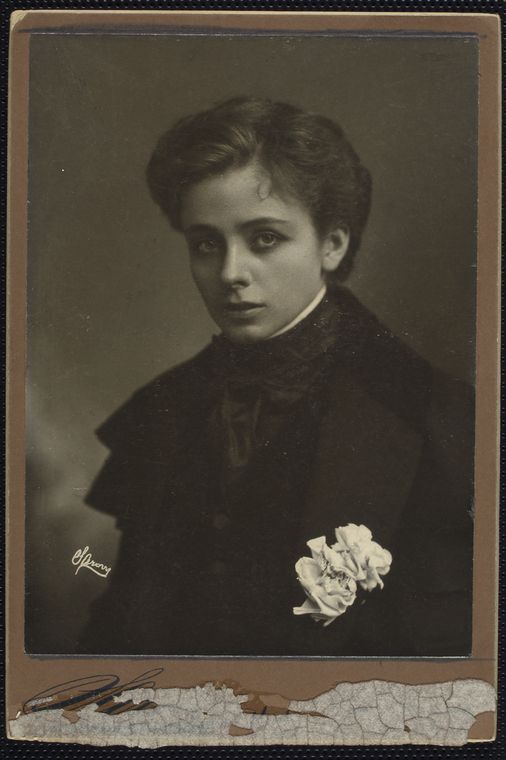
Portrait of Maude Adams as L'Aiglon, John White Alexander, ca. 1905

Portrait of Maude Adams as L’Aiglon, John White Alexander, ca. 1905

1-IMG_1323

I had this photograph of Maude Adams as L’Aiglon (The Eaglet), the son of Napoleon, taped to my mirror for years during college.  I think I clipped it out of a Life magazine about great American women.  I thought hers such a beautiful androgynous face — she also played Peter Pan — and I wished I could look like her.

The Kivas at Hano, Carl Oscar Borg, ca 1920s

The Kivas at Hano, Carl Oscar Borg, ca 1920s

Red Mesa, Monument Valley, Utah, Edgar Alwin Payne, ca 1935

Red Mesa, Monument Valley, Utah, Edgar Alwin Payne, ca 1935

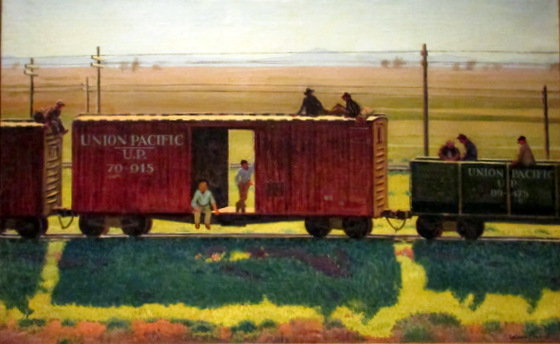
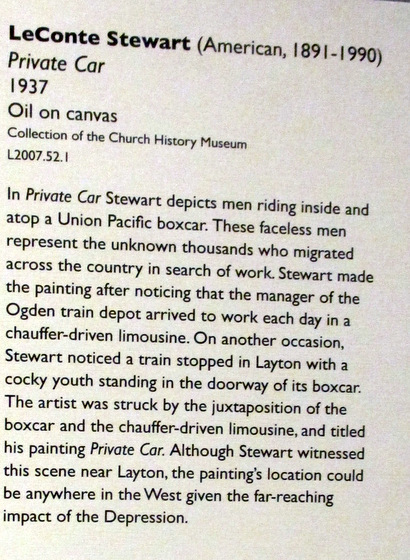
Private Car, LaConte Stewart, 1937

Private Car, LaConte Stewart, 1937

1-IMG_1329

Battle of the Bulls, Minerva Kohlhepp Teichert, ca. 1946

Battle of the Bulls, Minerva Kohlhepp Teichert, ca. 1946

Minerva Teichert attended the Arts Student League in New York City, where she studied under the powerful personality of Robert Henri.  Henri urged his students to forget about European movements and to create a new American style of art.  His students were urged to explore social realist themes of the city, especially scenes of laborers and industry.  Teichert absorbed his technique, but chose to paint themes that were familiar to her from  her life in the West.  When she left New York, Robert Henri said, “George Bellows, John Sloan and Minerva Kohlhepp — these are my bets…this girl from Utah you’re going to hear from.”

The Great White Throne, Zion National Park, LaConte Stewart, 1927

The Great White Throne, Zion National Park, LaConte Stewart, 1927

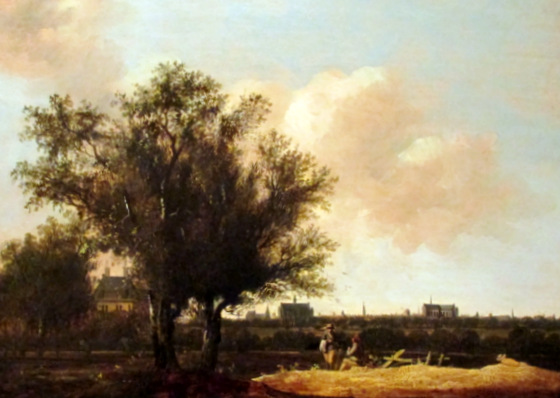
A View of Leiden, Pieter Cosyn (attributed), Dutch, 1630-after 1667

A View of Leiden, Pieter Cosyn (attributed), Dutch, 1630-after 1667

Merry Company -- Dirck Hals, 1623

Merry Company — Dirck Hals, 1623

Portrait of Francois Duquesnoy, by an imitator of Sir Antony van Dyck, Flemish

Portrait of Francois Duquesnoy, by an imitator of Sir Antony van Dyck, Flemish

Portrait of Francois Duquesnoy Detail

Portrait of Francois Duquesnoy Detail

I had to text this painting to my daughter because, I mean, have you ever seen such a French look?!  It’s so “hunh, hunh, hunh (all growly), ma jolie fille, come up to my apartement.  Come see my satyr carvings?  (What?)  Oh, my hair is tousled…?”

Museum of Fine Arts St Petersburg, Florida

Breton Soldier by Thomas Hovenden, 1880

Breton Soldier by Thomas Hovenden, 1880

I’ve just come back from a business trip to St Petersburg, Florida, in which Lands’ End, Inc. held a School Uniform Fit Event for St Petersburg Catholic Highschool.  As always, when I’m in a city for any length of time, I take advantage of any free time to hit the local Art Museum(s).  St Petersburg is rich in that it has not one, but three:  a Chihuly Museum, Salvatore Dali Museum and the Museum of Fine Arts, which held the greatest interest for me and was conveniently open when I had a spare hour.

Detail, Breton Soldier by Thomas Hovenden

I have to admit, I have a crush on this guy.  The artist is Thomas Hovenden, an Irish-American, who was hired by the Pennsylvania Academy of Fine Arts after they’d fired Thomas Eakins — just imagine! — because he insisted on his students learning to paint from the nude.  Hovenden was, to me, a worthy choice.  The brushstrokes are so luscious, rendering detail with such painterliness.  And as for the model, why do Frenchmen always seem to have the best hair?   Not that I wouldn’t recommend a different barber…..

City Window Series:  Still Life with Fruit by Leon Kroll, 1920

City Window Series: Still Life with Fruit by Leon Kroll, 1920

A still life with fruit always brings Cezanne’s paintings to mind, but I like Kroll’s more realistic style and love the feeling it gives one to view an interesting cityscape out the window, especially when one is warm and cozy inside.  Kroll was no doubt aware of Cezanne, as he completed his art studies in Paris.

afe Madrid (Mr and Mrs Chester Dale) by Guy Pene DuBois, 1926

Cafe Madrid (Mr and Mrs Chester Dale) by Guy Pene DuBois, 1926

Heart Ranch, Barber County Kansas, John Steuart Curry, 1929

Heart Ranch, Barber County Kansas, John Steuart Curry, 1929

The Curry Farm, John Steuart Curry, 1930

The Curry Farm, John Steuart Curry, 1930

I like the Regionalist paints of John Steuart Curry and Thomas Hart Benton.  Regionalism not only portrayed the Great Plains world in which they’d grown up, an area that had been neglected in art; it expressed dissatisfaction with the centralization of manufacturing that had occurred following the Industrial Revolution and touted independence and agrarian values in art.  Curry depicted families surviving natural disaster, man versus nature.  The Dust Bowl Years on the Great Plains had created great suffering due to complete crop failure and lack of job opportunities.  Curry did not produce propagandist paintings like Diego Rivera; he chose to express the endurance and pleasures of the common man, making the inextinguishable human spirit his inspiration.

 
Portrait of Paul Robeson by Randall Davey, ca. 1920-1925

Portrait of Paul Robeson by Randall Davey, ca. 1920-1925

Portrait of Fletcher Martin with a German Pistol, George Bellow, 1943

Portrait of Fletcher Martin with a German Pistol, George Bellow, 1943

There was too much of a glare on this painting to photograph it straight on.  The contrast between the military helmet and the civilian clothes make me wonder whether Fletcher Martin is dressed for a reconnaissance mission or is a saboteur.

Cliff Dwellers' Country, John Sloan, 1925

Cliff Dwellers’ Country, John Sloan, 1925

Contemplation by Jacques-Emile Blanche, 1883

Contemplation by Jacques-Emile Blanche, 1883

This painting by Jacques-Emile Blanche is reminiscent of Edouard Manet and is perhaps of a model both artists painted.  He also painted portraits of Henry James, Virginia Woolf and James Joyce.   (Click on the name to see the portrait.)

Portrait of Paul Gauguin c. 1900, by Georges-Daniel de Montfried

Portrait of Paul Gauguin c. 1900, by Georges-Daniel de Montfried

1-IMG_1173I thought this write-up of the relationship between Monfried and Gauguin was so interesting, I wanted to quote it in full.

Woman Reading by Pierre-Auguste Renoir, 1891

Woman Reading by Pierre-Auguste Renoir, 1891

Still Life with Peonies by Henri LeBasque

Still Life with Peonies by Henri LeBasque

I would buy this little painting any day of the week.  I love the loose, effortless-looking brush strokes.

Laundresses on the Shore of the La Touques by Eugene Louis Boudin, 1883

Laundresses on the Shore of the La Touques by Eugene Louis Boudin, 1883

Boudin famously convinced Claude Monet to begin painting “en plein-air,” that is, outdoors.  I have always thought him a better painter than Monet. Again, I thought the Museum notes for this painting worth sharing, just because he was so influential.  Though he paints more loosely, his work is significantly more realistic than the Impressionsists, so he is associated in my mind with CharlesFrancois Daubigny, who also painted rivers and lakes and is perhaps my favorite landscape artist.

1-IMG_1179

Springtime in Giverny, Afternoon by Claude Monet, 1885

Springtime in Giverny, Afternoon by Claude Monet, 1885

Houses of Parliament, Effect of Fog, London by Claude Monet, 1904

Houses of Parliament, Effect of Fog, London by Claude Monet, 1904

The Schie near Rotterdam by Johan Barthold Jongkind, c. 1867

The Schie near Rotterdam by Johan Barthold Jongkind, c. 1867

Claude Monet called Jongkind, a Dutch painter, “his real teacher,” “to whom I owe the crucial training of my eye.”

The Road to the Villiage of Vertheuil, Snow by Claude Monet, 1879

The Road to the Villiage of Vertheuil, Snow by Claude Monet, 1879

To the left of the road is the house where Monet lived, and just above it is La Tourelles (The Turret), his landlord’s house.

Reading by Berthe Morison, 1888

Reading by Berthe Morison, 1888

Berthe Morisot exhibited in the first Impressionist Art Exhibit ever held, along with the other pioneers of Impressionism, Monet, Degas etc.  She married Edouard Manet’s brother, Eugene, and unlike many women painters of the time, notably Mary Cassatt, who never married, managed to be both a mother and married woman AND a constantly productive artist.  She only missed one Impressionist show, the year her daughter was born.

Three Bathers near a Wooded Point by Camille Corot, ca. 1865-1870

Three Bathers near a Wooded Point by Camille Corot, ca. 1865-1870

Again, the museum notes are worth reading.  Corot is hard to pin down with respect to any movement in art.  A Corot painting always looks exactly like a Corot painting.  That dark gray, olive green is always present, as well as the airiness of his trees and subdued blue of the sky is a hallmark, but Corot is in a class by himself.

1-IMG_1193

Shepherd and his Flock by Charles Jacque, c. 1850

Shepherd and his Flock by Charles Jacque, c. 1850

Charle Jacque was a friend of Jean-Francois Millet, and followed him to the village of Barbizon and the Forest of Fontainebleu, where they painted simple and humble subjects instead of  the Greek Myths, religious subjects and Classical dramas favored by the Academy.  I think it is gorgeous.   It’s much like the landscape of Wisconsin.

Julia Foster Ward by Jules-Joseph Lebebvre, 1880

Julia Foster Ward by Jules-Joseph Lebebvre, 1880

This is likely a postpartum painting commissioned after Julia’s death.  The crown of Morning Glories may symbolize the transience of life, especially for one who blooms only briefly as a young woman.

A Man with Two Loaves of Bread by Jean-Francois Rafaelli, 1879

A Man with Two Loaves of Bread by Jean-Francois Rafaelli, 1879

This painting was perhaps inspired by Les Miserables by Victor Hugo.  It’s hero, Jean Valjean, is imprisoned for years for stealing bread to feed his sister’s children.  Rafaelli studied with the academic painter, Jean-Leon Gerome, but became associated and exhibited with the Impressionsists by virtue of his subject matter.


The Choice Rug by Addison Thomas Millar, 1890

The Choice Rug by Addison Thomas Millar, 1890

Orientalism refers to the painted portrayal of a romanticized view of North Africa and the Near East, areas that Europeans were interested in colonizing in the 19th Century.  Orientalist paintings are always among the ones I like best in any museum.  They are rich in color, not stiff with indiscernible brushstrokes, nor disappointingly meager in realistic detail.

A Louis XV Interior by Walter Gay, 1915,

A Louis XV Interior by Walter Gay, 1915,

I included the Museum notes about this painting, because my love for paintings and love for interior decorating, collectible porcelain and antiques goes hand in hand.  I can easily identify using my own home and those of my friends as subjects.

1-IMG_1207

The "Home Sweet Home Cottage', Soutth Hampton, Long Island by Childe Hassam,1916
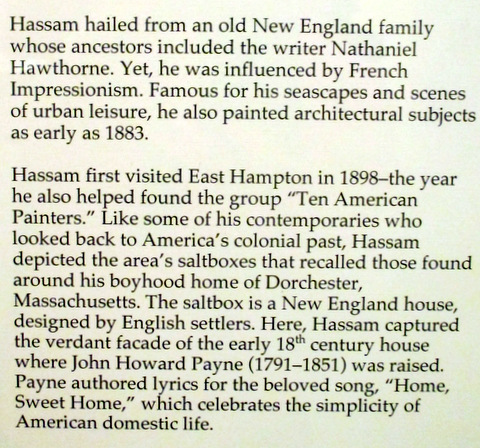
The “Home Sweet Home Cottage’, Soutth Hampton, Long Island by Childe Hassam,1916

1-IMG_1216

Landscape with Woman Carrying Washing Towards the River by Thomas Worthington Whittredge, c. 1880s

Landscape with Woman Carrying Washing Towards the River by Thomas Worthington Whittredge, c. 1880s

Florida Landscape (St Johns River) by Thomas Moran, 1877

Florida Landscape (St Johns River) by Thomas Moran, 1877

One of the greatest landscape artists of all time, along with Frederic Church and Albert Bierstadt, Moran was instrumental in persuading Congress to establish Yellowstone National Park due to his stunning portrayals of its landscape.  This painting was inspired on a trip to St. Augustine with his wife, Mary Nimmo Moran, who was a first-rate etcher and landscape painter in her own right.  Here is an example of her work:
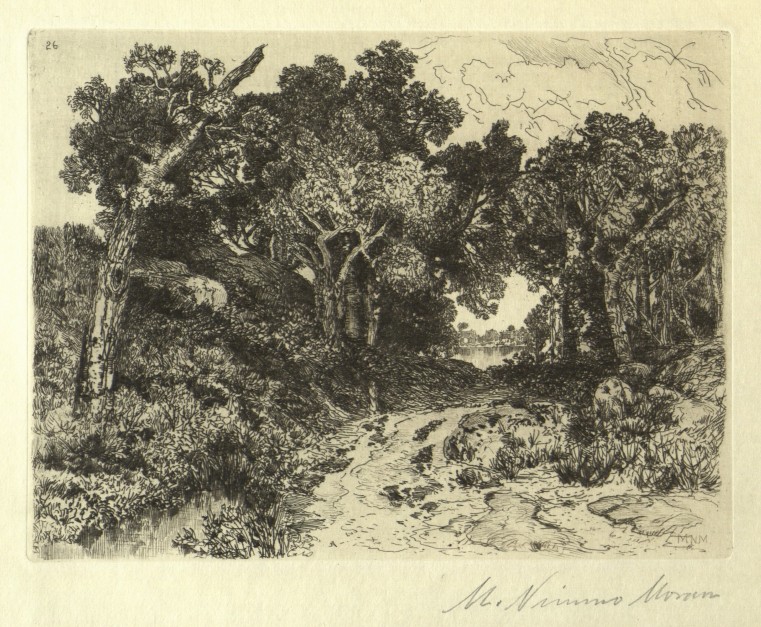
What a well matched couple!

Early Moonrise Florida by George Inness, 1893

Early Moonrise Florida by George Inness, 1893

1-IMG_1211

Capri and Mount Solaro by Theordore Robinson, 1890

Capri and Mount Solaro by Theordore Robinson, 1890

Venetian Landscape BY John Henry Twachtman, 1878

Venetian Landscape BY John Henry Twachtman, 1878

Evening in Giverny by John Leslie Breck, c. 1891

Evening in Giverny by John Leslie Breck, c. 1891

This moonlit painting of the village of Giverny is the antithesis of the scene we associate with that name, but I suppose the village may have been fairly stark.  Monet’s gardens were a bower of watery loveliness away from the workaday world.

Evening in Grez, France by William Anderson Coffin, c. 1881-1882

Evening in Grez, France by William Anderson Coffin, c. 1881-1882

The French village of Grez-sur-Loing became an artists’ colony south of the forest of Fontainebleau.  Grez attracted artists and writers in the latter half of the 19th century, Camille Corot being one of the first who painted there.  During the 1870s and 1880s, other notables at Grez included author Robert Louis Stevenson, composer Frederick Delius, and painters like John Singer Sargent, Theodore Robinson and Willard Metcalf.

St Petersburg Catholic Highschool Fit Event

St Petersburg Catholic Highschool Fit Event:  From left to right, Kelli, Anna, Sarah, Nadine, Me, Debra, Chris and Ford

With Nadine and Chris at the Historic Vinoy Hotel in St Petersburg

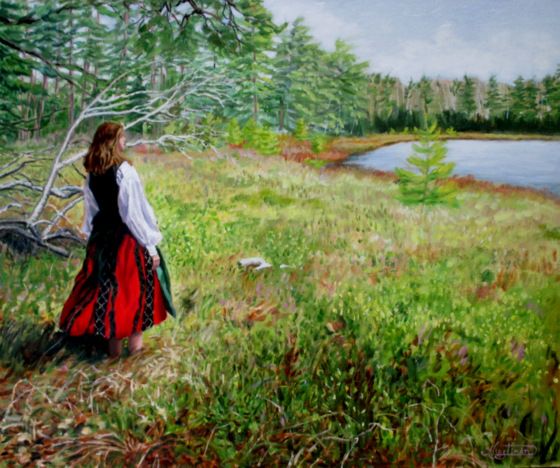
With Nadine and Chris at the Historic Vinoy Hotel in St Petersburg

Rabbit Lake Sauna

Lakeside Sauna

Rabbit Lake Sauna

Saunas are ubiquitous in Finland and just about the same in Aitkin, MN and Crystal Falls, MI, where I grew up.  Most weren’t as romantically located as this one, a modern day example at a second home.  My family were by and large farmers and saunas were workaday baths, situated somewhere on the property, but generally not picturesquely next to a lake.  I’m very interested in painting saunas right now.  I’ve wanted to have one at my home for years — opportunities to take a sauna at the homes of my relatives have become increasingly less frequent,  because, well, they’re in Minnesota — and I’ve just figured out how I might do it.  So, this is my first sauna painting.  Our family tradition was to visit for sauna on a Saturday nights.  Coffee would be served.  The men would go right away for the hottest of the steam, while the women laid coffee, pulla (cardamom-flavored, sweet bread) and cookies on the table.  Then, the women would go, from the oldest to the youngest.  Most saunas in my youth had electricity, but they didn’t have running water.  The stoves were fed with wood.  There would be multiple milk cans in the dressing room.  We would fill our pails before entering the steam room, wetting our washcloths in the cool water and laying them over our faces so we could breathe.  When it came time to wash, we’d ladle water out of the hot water reservoir next to the stones on top of the stove and mix it with the cool water in our pails, then scrub up, dumping the pail over our heads to rinse off.  Sometimes we’d have to fill more than one pail, of course.  We’d come back to the kitchen tables, pink faced, with towels wrapped around our heads and talk for hours.  It’s a very good memory.

Hapsburg Exhibit at the Minneapolis Institute of Art

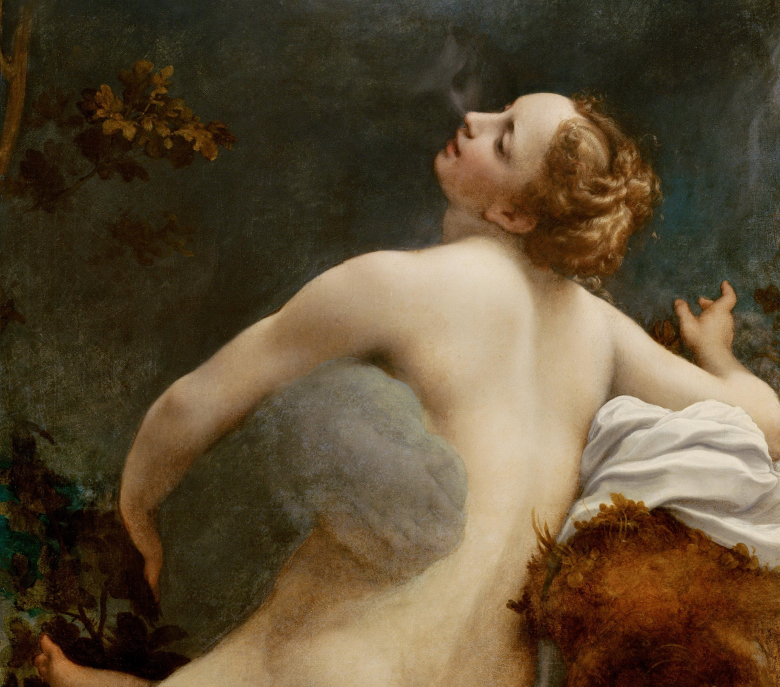
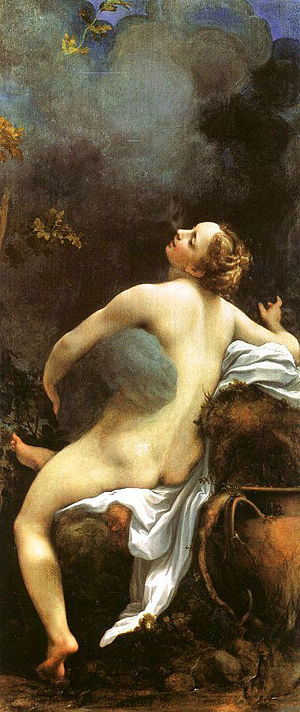
https://theperfumechronicles.files.wordpress.com/2010/10/jupiter-and-io3.jpg

Jupiter and Io, Corregio

Treasures from the Kunsthistorisches Museum in Vienna are at the Minneapolis Institute of Art until May 10th.  In addition, to celebrate the 100th Anniversary of the MIA, a Vermeer — one of only 34 in the world —  is on view for free until May 3rd.

http://new.artsmia.org/wp-content/uploads/2015/01/2015_MIABirthday_001-860x1024.jpg

Woman Reading a Letter, Jan Vermeer

http://cosimodemonroy.com/wp-content/uploads/2013/01/Jupiter-e-Io-Correggio1.jpg

Detail

I never noticed the beautiful hand inside the somewhat paw-like Jupiter cloud.  That just makes it so much better, because frankly, the paw kind of creeped me out.  This is an absolutely gorgeous painting and if they’d had a poster larger than a foot by six inches, I would have bought it.  I’m not sure I’ve ever seen a Correggio before.  No scholarly comments here.  I don’t know a thing about Correggio.

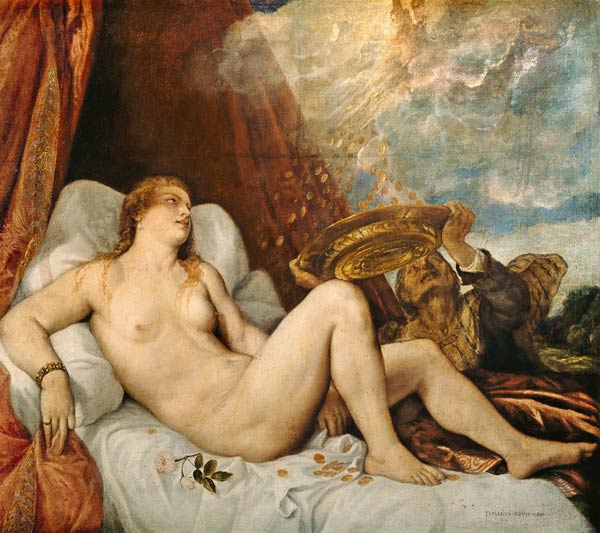
http://www.art-prints-on-demand.com/kunst/tizian_eigentl_tiziano_vercel//Danae.jpg

Danae, Titian

Titian did a number of Danaes.  It’s such a great opportunity to paint a beautiful woman and it isn’t necessary to come up with any challenging postures or anything.  All that happens is that Zeus (or Jupiter to the Italians) drops a shower of golden coins on her.  With that formula, any good life-painting session could result in a painting of Danae.

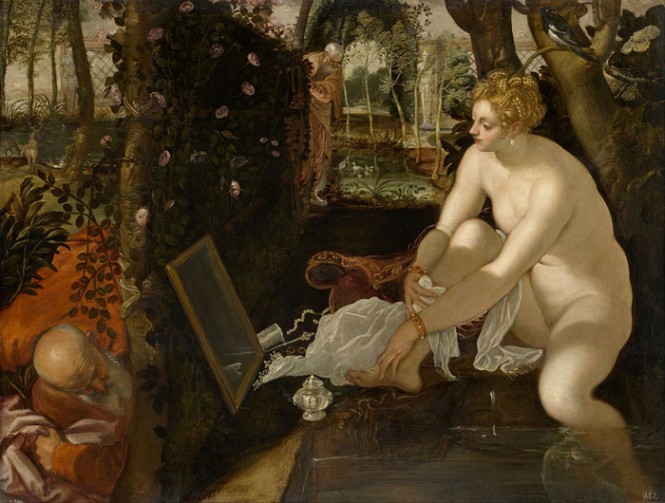
http://www.italianways.com/wp-content/uploads/2015/01/tintoretto-Susanna-e-i-vecchioni-1557-Kunsthistorisches-Museum-Wien-665x503.jpg

Susanna and the Elders, Tintoretto

I also don’t know anything about Tintoretto.  except that he painted so intensely that he was called Il Furioso.  Apparently it ran in the family, because his father earned such a reputation defending the city gates of Padua, that his son was tagged with the epithet Robusti too.

Infanta Maria Teresa, Velasquez

Pardon the short form of the artist’s names.  Velasquez was really named Diego Rodríguez de Silva y Velázquez.  So, enough said.

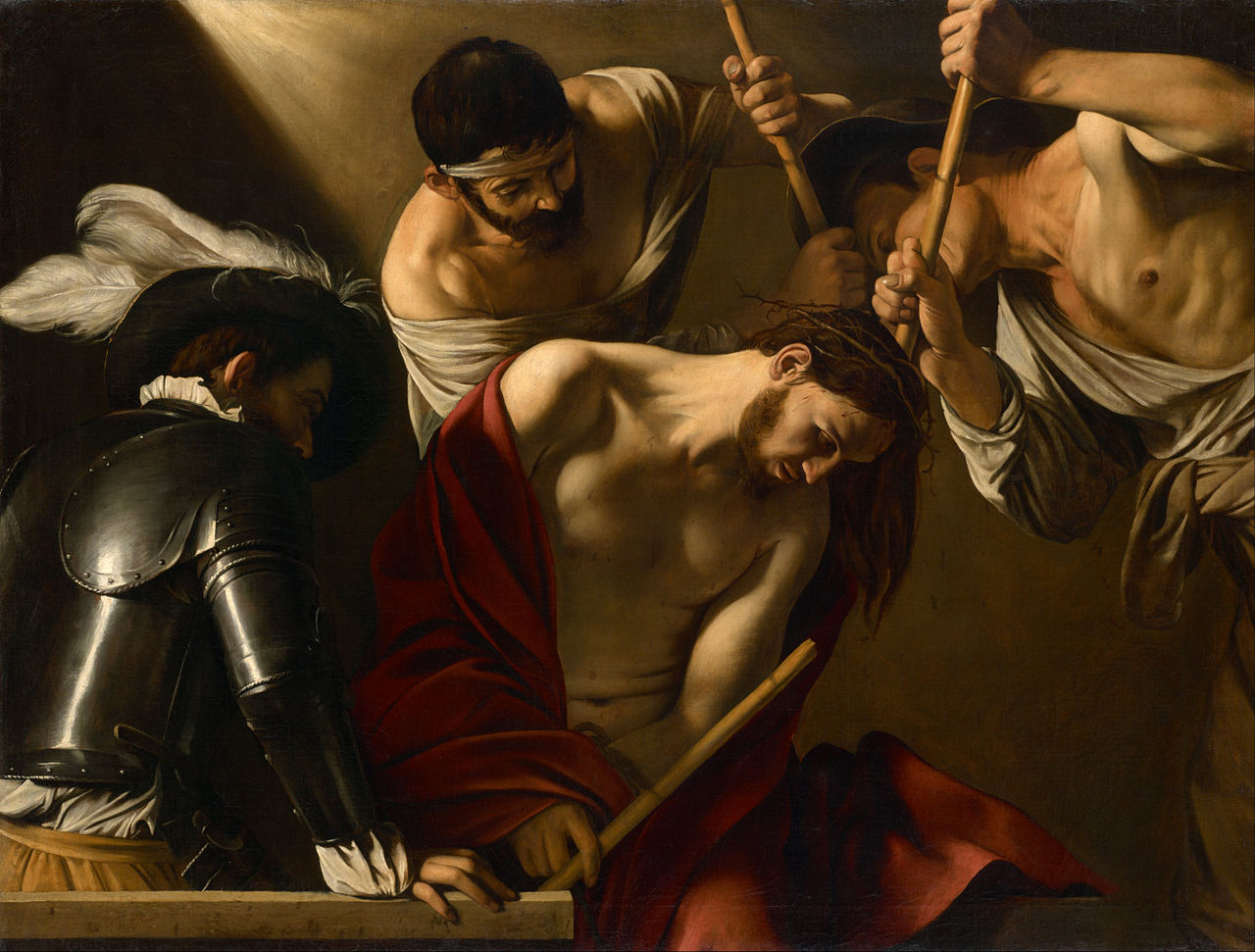
http://upload.wikimedia.org/wikipedia/commons/thumb/5/52/Michelangelo_Merisi,_called_Caravaggio_-_The_Crowning_with_Thorns_-_Google_Art_Project.jpg/1280px-Michelangelo_Merisi,_called_Caravaggio_-_The_Crowning_with_Thorns_-_Google_Art_Project.jpg

The Crowning with Thorns, Michelangelo Merisi, called Caravaggio

I couldn’t figure out at first exactly what the slaves were doing with the sticks, although it was probably perfectly apparent to everyone else that they were dragging at the crown in order cause the maximum amount of damage on Christ’s head.  I bought a book about Caravaggio at the Museum.  His paintings are often full of writhing subjects, engaged in (often) bloody actions, such as….

and

The thing that immediately strikes me is that in spite of knowledge of human anatomy these Renaissance artists had, it would have been impossible for Caravaggio to do these chiaroscuro lighting situations without models holding the poses for hours under dramatic lighting sources.

http://upload.wikimedia.org/wikipedia/commons/8/8b/Giovanni_Battista_Moroni_003.jpg

Portrait of Sculptor Alessandro Vittorio, Giovanni Batista Moroni

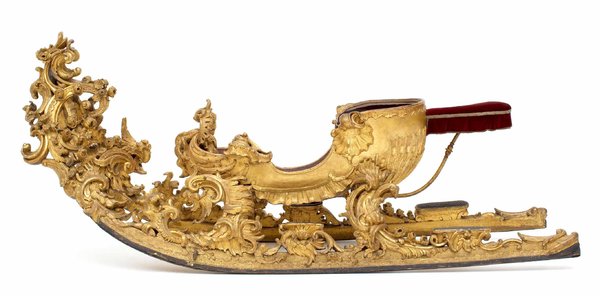
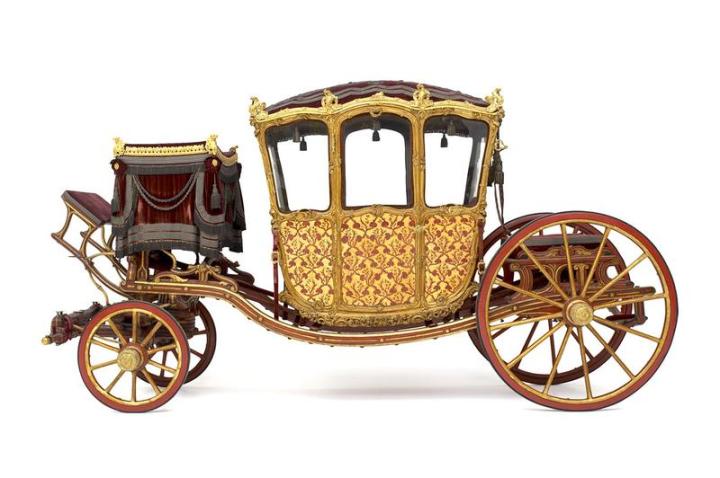
In addition to the world’s greatest artists, the Hapsburg Exhibit has a wonderful coach, a sleigh (which was used in a royal wedding — the groom sat astride behind the seat, with his feet anchoring him on the runners),  gilded horse harnesses, a ball gown, the livery of Court officials.  It’s so much fun!  Go see it!
http://p2.storage.canalblog.com/28/39/119589/95481714.jpg

Gilded Sled and harness, Kunsthistorisches Museum

http://static01.nyt.com/images/2014/04/18/arts/18ANTIQUES3/ANTIQUES3-articleLarge.jpg

Better view of the Sled

https://enfilade18thc.files.wordpress.com/2014/09/aeb16922cdfe68fab53583e04e0b66ad.jpg?w=720

The Minnesota Marine Art Museum: Go there as soon as you can!

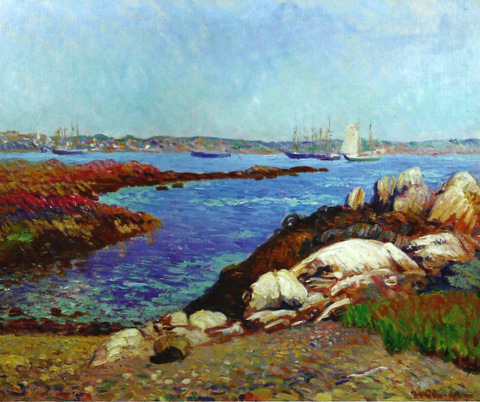
William Glackens, Portsmouth Harbor, New Hampshire (1909)

William Glackens, Portsmouth Harbor, New Hampshire (1909)

A week ago, my friend, Josephine, and I went to visit the Minnesota Marine Art Museum on the recommendation of my cousins, Jere and Cherie (see Jacques Art Center, Aitkin, MN).  We’d heard there were French Impressionists there, but there was so much more.  Besides a representative painting of just about every French Impressionist, there is large room of Hudson River School and Luminist paintings, which were my favorites, as well as Fauve and Post-Impressionistist and paintings of modern marine art masters.  The great majority of the paintings have some connection with water or the sea.  I’ve included below just a sampling of what may be seen there.  I couldn’t get images of many of my favorites, and of course, so small a format as a blog often does no justice to large paintings.  I highly recommend it.  It’s worth the drive!

Thomas Moran, Near Southhampton (1891)

Thomas Moran, Near Southhampton (1891)

William Bishop, The Battle of Trafalgar, 21st October 1805

William Bishop, The Battle of Trafalgar, 21st October 1805

In addition to this dramatic, large painting of the Battle of Trafalgar, the Museum Collection contains a long, long letter from Nelson to Lady Hamilton (see my Blog from February 7, 2013), and his onboard, shaving table, a very cunning piece of furniture with compartments for all his personal care items.  Pretty cool!

William Trost Richards, Conanicut Island, Rhode Island (1885)

William Trost Richards, Conanicut Island, Rhode Island (1885)

Jack Gray, Schooner Bluenose (1959)

Jack Gray, Schooner Bluenose (1959)

Eugene Boudin, Villerville, Rivage Maree Montante Octobre (1893)

Eugene Boudin, Villerville, Rivage Maree Montante Octobre (1893)

Camille Pissarro, Le Quai du Ponthuis, Pointoise (1876)

Camille Pissarro, Le Quai du Ponthuis, Pointoise (1876)

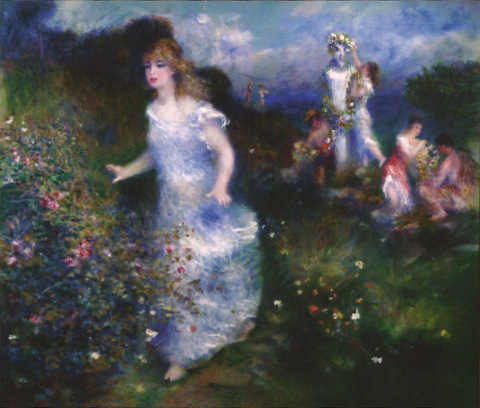
Pierre-August Renoir, La Fete du Pan (1879)

Pierre-August Renoir, La Fete du Pan (1879)

Jack Gray, East Ironbound Winter (1961)

Jack Gray, East Ironbound Winter (1961)

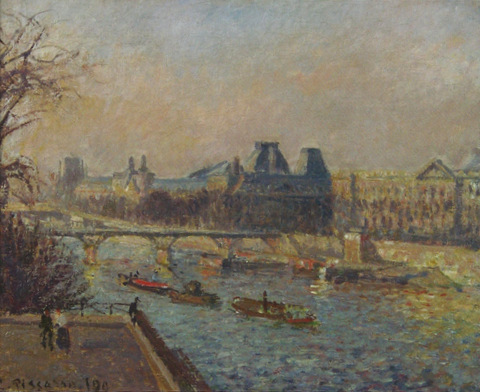
Camille Pissarro, Le Louvre, Apres-Midi (1902)

Camille Pissarro, Le Louvre, Apres-Midi (1902)

Alfred Sisley, Le Coup de Vent, Matin de Mai (1890)

Alfred Sisley, Le Coup de Vent, Matin de Mai (1890)

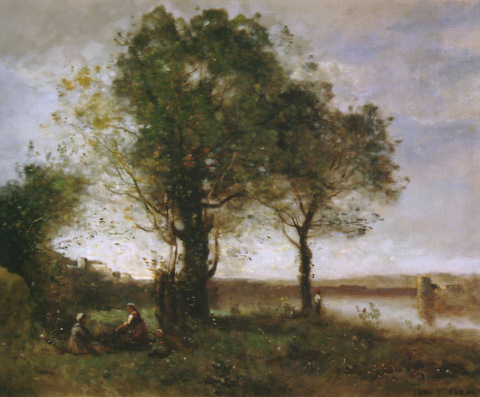
Jean-Baptiste Camille Corot, Brume Matinale au Marais (1871)

Jean-Baptiste Camille Corot, Brume Matinale au Marais (1871)

Paul Signac, Les Andelys, L'ile a Lucas (1886)

Paul Signac, Les Andelys, L’ile a Lucas (1886)

After the Museum, we had a bite to eat at the Blue Heron Coffee House, 162 W 2nd St, Winona.  Just what we needed before we got back on the road home.  It’s open until 6:00.  We’d dined out the previous evening in Eau Claire, after visiting the best antique store I’ve been to so far between Wisconsin and Minnesota, the Antique Emporium at 306 Main.  It is distinguished by being not only large, but being filled with objets d’art.  Everything has been collected by the owner, so although there’s a great selection, all the contents have a consistent quality.  Josie and I had dinner at the Bijou Bistro entirely to ourselves, since there was a blizzard in progress outside.  Everyone else just went home.  It’s at 2629 E. Clairemont Ave, Eau Claire.  We both had tenderloins with a mushroom sauce over garlic potatoes and asparagus.  It was divine!  I will now plan on having dinner in Eau Claire when I’m on the way to Minneapolis or Aitkin.

Flourless Chocolate Cake, Bijou Bistro

Flourless Chocolate Cake, Bijou Bistro